


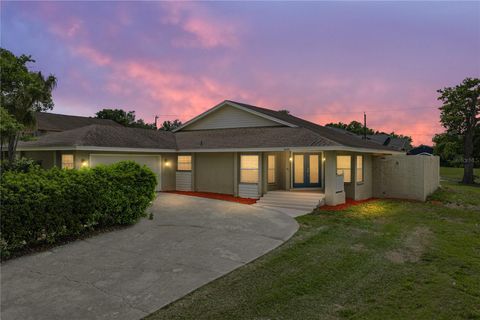
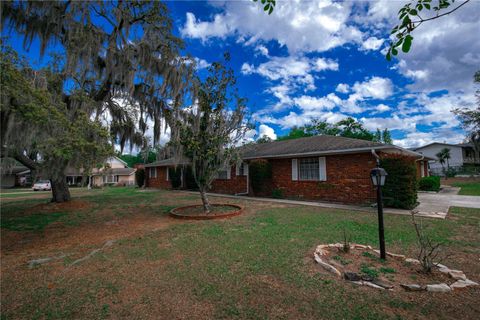
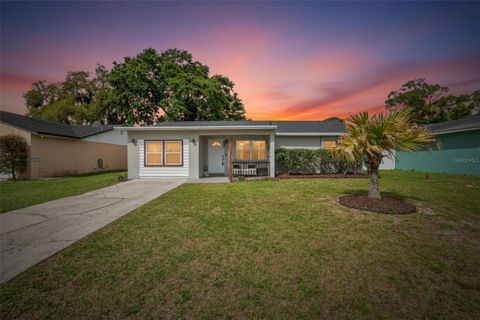
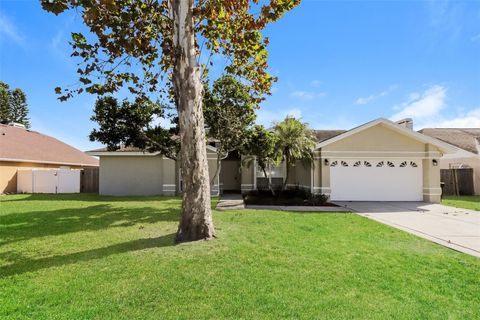
Why Buy a Home in Lakeland FL
Lakeland’s real estate appeal starts with geography. Sitting almost exactly at the midpoint of Interstate 4 between Tampa and Orlando, the city gives buyers access to two of Florida’s largest job markets without requiring them to pay the housing premiums those metros command. Commuters heading west reach the Tampa central business district, Westshore office corridor, and Tampa International Airport in roughly 35 to 40 minutes under normal traffic conditions. Commuters heading east reach the Lake Nona Medical City, downtown Orlando, and the I-Drive convention corridor in roughly 50 to 55 minutes. For households where one partner works in Tampa and another works somewhere along the I-4 spine, Lakeland is frequently the only logical home base, a dynamic that has driven sustained buyer demand even as coastal inventory has tightened and prices have climbed.
The employment base within Lakeland itself has also grown substantially. Publix Super Markets, the employee-owned grocery giant, maintains its corporate headquarters and multiple distribution facilities in Lakeland, employing more than 20,000 people in Polk County alone across corporate offices, warehouse operations, and regional support functions. Watson Clinic, one of Florida’s largest multi-specialty physician groups, is headquartered here with hundreds of providers across multiple campuses. Lakeland Regional Health operates a major acute-care hospital that has undergone significant expansion over the past decade. Amazon operates fulfillment infrastructure in the area, and Saddle Creek Logistics, one of the country’s largest privately held logistics companies, is headquartered in Lakeland. TECO Energy and Peoples Gas maintain substantial facilities in Polk County, and the broader logistics and warehouse sector along the I-4 and Polk Parkway corridors continues to attract national distribution operations drawn by the county’s land costs and transportation access.
The city’s population stands at approximately 120,000 within municipal limits, with Polk County as a whole approaching 750,000 residents. That population base supports a mature retail, dining, and services ecosystem that newer, faster-growing exurban communities cannot match, yet Lakeland still retains the pricing discipline of an inland market rather than a coastal one.
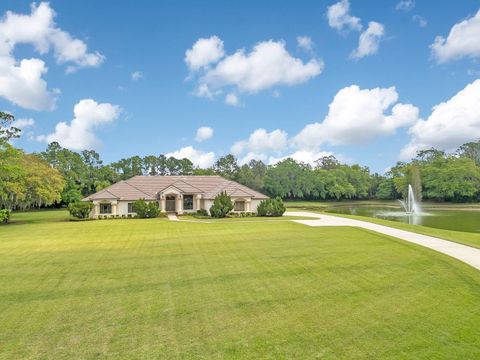
One of Lakeland’s most distinctive and marketable features is its lakes. The city has 38 named lakes within its municipal boundaries, ranging from small residential ponds to substantial recreational bodies like Lake Parker and Lake Hollingsworth. Lakefront property in Lakeland trades at a meaningful premium over comparable inland homes, but that premium still represents a fraction of what waterfront commands in Tampa Bay, Sarasota, or any Gulf-front market. For buyers who want to wake up to water every morning without paying a coastal price, Lakeland’s lake inventory is genuinely difficult to replicate elsewhere in Central Florida at similar price points.
Cultural and institutional assets add further depth. Florida Southern College, whose campus is the world’s largest single-site collection of Frank Lloyd Wright architecture, brings an arts and intellectual energy uncommon for a city of Lakeland’s size. The RP Funding Center hosts concerts, arena sports, and major conventions. Lakeland Linder International Airport operates as a growing reliever airport for the Tampa Bay region, with FedEx hub operations and increasing connectivity for corporate aviation. Downtown Lakeland’s Lake Mirror promenade, Munn Park historic district, and independent restaurant and retail scene have undergone sustained investment, creating a walkable urban core that attracts both younger buyers and downsizing empty-nesters.
Cost-of-living fundamentals reinforce the case. Polk County property tax rates rank among the lowest in Central Florida on a per-dollar-of-value basis. Florida levies no state income tax. Homeowner’s insurance premiums, while elevated statewide compared to the national average, are generally lower in Polk County than in coastal counties where wind and storm surge exposure drives rates higher. For buyers calibrating monthly carrying costs against income, Lakeland’s combination of lower purchase prices and lower ongoing costs is compelling.
Lakeland Neighborhoods and Communities
Lakeland is not a monolithic market. The city spans a wide range of neighborhoods, each with its own character, price range, school zone, and buyer profile. Understanding the differences is essential to finding the right fit.
South Lakeland and Grasslands
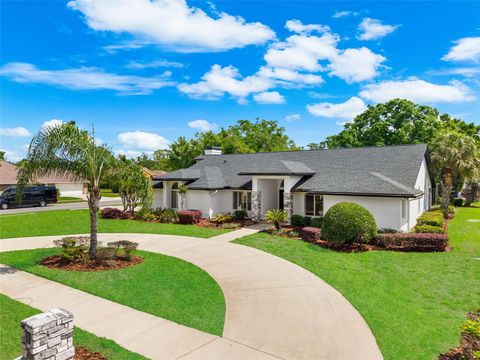
South Lakeland is home to some of the city’s most established and sought-after residential areas. The Grasslands Golf and Country Club community anchors the southern corridor, offering gated sections, a championship golf course, and a range of home styles from attached villas to large custom residences. Prices in Grasslands typically run from approximately $400,000 on the lower end for smaller villas to $800,000 or above for larger homes with premium golf course or lake views. The area draws established professionals, retirees, and buyers relocating from Tampa Bay who want a turnkey lifestyle without the coastal premium. South Lakeland generally offers good access to the Polk Parkway, making commutes to both the I-4 westbound and eastbound corridors efficient.
North Lakeland and Lake Gibson
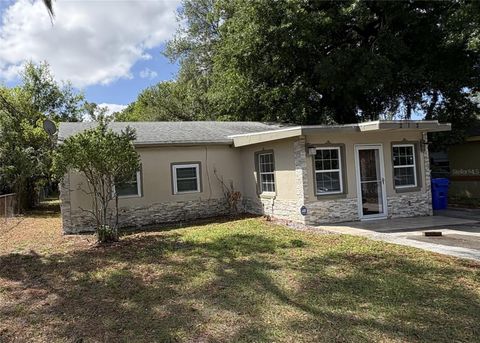
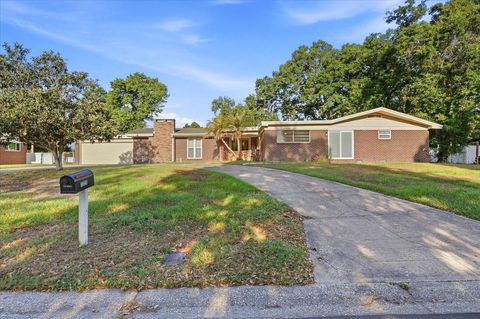
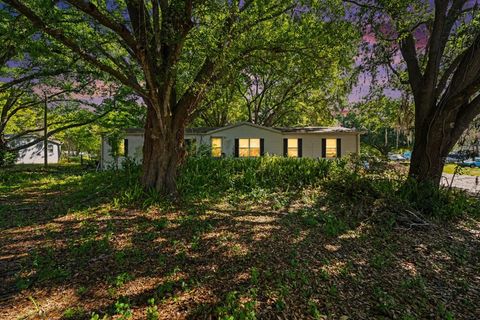
North Lakeland, anchored by the Lake Gibson corridor along US Highway 98, offers some of the city’s most affordable entry points for buyers. The area is characterized by established single-family neighborhoods, ranch-style homes from the 1970s and 1980s, and a working-class, owner-occupant community. First-time buyers and investors looking for rental yield frequently focus here, with prices that can still be found in the $200,000s for modest single-family homes. The Lake Gibson High School zone serves this area. North Lakeland has seen growing interest from buyers priced out of the downtown districts who want a single-family home at an accessible price point.
Downtown Lakeland and the Lake Mirror District
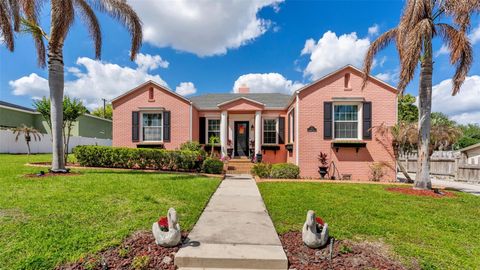
The downtown core and the Lake Mirror district represent Lakeland’s most walkable and historically rich residential environment. Craftsman bungalows, Florida vernacular cottages, and early-twentieth-century homes line streets within walking distance of the lakefront promenade, Munn Park, and the city’s independent restaurant and retail scene. Prices in the downtown area and adjacent historic neighborhoods typically range from approximately $250,000 for smaller bungalows needing updates to $600,000 or above for larger, fully renovated historic homes on desirable lots. The buyer profile skews toward young professionals, remote workers, and lifestyle-driven buyers who prioritize walkability and neighborhood character over square footage. Historic district designation applies to portions of this area, which affects renovation permitting but also provides some protections against incompatible infill development.
Eaglebrooke
Eaglebrooke is a master-planned golf community in southeast Lakeland, developed around an 18-hole championship course. The community offers gated access, a clubhouse, and a mix of production and semi-custom homes in a range that runs roughly from $400,000 to $700,000 depending on lot size, age, and finish level. Eaglebrooke draws buyers who want the amenity package of a golf community, including the social infrastructure of a clubhouse and pool, with easy access to the Polk Parkway and the Christina-area school corridor. The community has a mature, established feel, with significant tree canopy and a range of home sizes that supports both families and semi-retired buyers.
Bridgewater
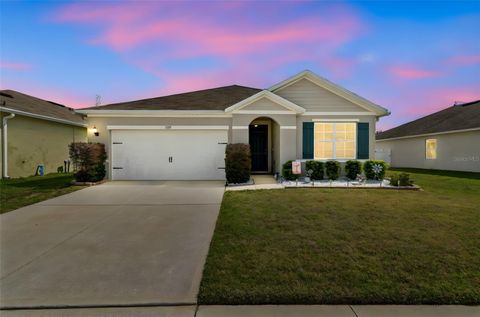
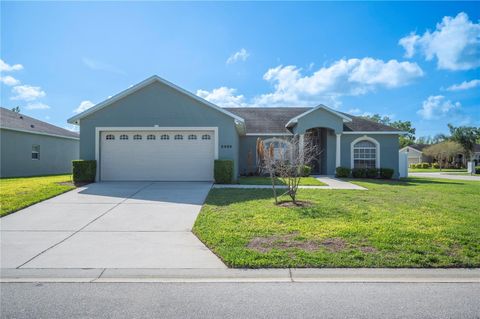
Bridgewater is one of the larger master-planned new-construction communities in northwest Lakeland, with Lennar and DR Horton among the active builders. The community appeals to buyers who want new construction with builder warranty protection, modern floor plans, and neighborhood amenities including a pool and recreation area, at price points that run roughly from $320,000 to $500,000 depending on home size and lot. Northwest Lakeland’s location along the US 98 corridor provides reasonable I-4 access. Bridgewater draws a high proportion of first-time buyers, young families, and I-4 corridor commuters who prioritize new construction over historic character.
Arden
Arden is a newer active-lifestyle master-planned community positioned near the I-4 and Polk Parkway interchange in southern Lakeland. The community is built around an agricultural and recreational amenity concept, with community gardens, trails, and outdoor programming integrated into the neighborhood design. Arden has attracted buyers who want something different from a conventional Florida subdivision: a more intentional community structure oriented around outdoor living. Pricing is generally in a range comparable to Bridgewater, with new construction the primary offering.
Imperial Lakes
Imperial Lakes is an established community in east-central Lakeland with lake access as its primary lifestyle amenity. The community offers a mix of home ages and styles, with the lake access driving a premium over comparable non-lakefront inventory. Buyers here typically value the established neighborhood character, the recreational boating and fishing access, and the relatively central location within the city. Prices vary widely based on lot type and home condition.
The Christina Area
The Christina area in southeastern Lakeland is one of the city’s most consistently desirable suburban corridors. The area is characterized by established subdivisions from the 1980s through the 2000s, a reputation for strong school access within the Polk County system, and a suburban residential feel that attracts families prioritizing school quality and neighborhood stability. Proximity to the Polk Parkway makes commuting efficient, and the area’s established commercial corridor provides convenient everyday services. The Christina zone draws buyers relocating from Tampa Bay who want a conventional suburban environment with solid schools at prices below what comparable suburban neighborhoods in Hillsborough or Pinellas County would cost.
Lakeland FL Schools
All public schools in Lakeland are part of the Polk County School District, one of the larger school districts in Florida by enrollment. The district operates multiple high schools serving Lakeland and its surrounding areas, with school zone assignment determined by residential address.
Lakeland High School is the city’s oldest and most historically significant public high school, located near the downtown core. The school has a long tradition in academics and athletics and serves the central and downtown portions of the city. George Jenkins High School, located in south Lakeland, serves much of the southern residential corridor including areas near Grasslands and the Polk Parkway. Jenkins has consistently ranked among the stronger public high schools in Polk County and draws buyer attention from families evaluating southern Lakeland neighborhoods. Lake Gibson High School serves the north Lakeland corridor, drawing from the working-class and first-time-buyer neighborhoods along the US 98 north corridor. Kathleen High School serves portions of north and northwest Lakeland, with a student population drawn from a mix of suburban and rural residential areas on the city’s northern and western edges.
Private school options are meaningful in Lakeland. Lakeland Christian School is one of the most prominent private K-12 institutions in Polk County, with a college-preparatory curriculum and strong athletics programs. The school draws enrollment from across the city and from outlying Polk County communities. Santa Fe Catholic High School provides another private secondary option in the area.
At the post-secondary level, Lakeland has two notable institutions. Southeastern University, affiliated with the Assemblies of God, is a four-year institution with a residential campus in south Lakeland offering programs in business, education, ministry, and the arts. Florida Southern College, the older and larger of the two, is a private liberal arts institution nationally recognized for academic quality and for its Frank Lloyd Wright campus, which is itself a legitimate architectural landmark that attracts visitors and enhances the city’s cultural profile. Florida Poly, the newest state university in Florida focused on technology and engineering, is located just east of Lakeland in Auburndale, within easy commuting distance.
Buyers with school-age children are strongly advised to verify current school zone assignments for any specific property through the Polk County School District’s official zone lookup tool, as zone boundaries are subject to periodic revision and can differ meaningfully between adjacent neighborhoods.
Buying a Home in Lakeland FL
The I-4 corridor commuter thesis drives a significant share of Lakeland’s buyer demand. Buyers who work in Tampa but cannot afford or do not want to pay Hillsborough County home prices frequently identify Lakeland as the logical alternative. The math is straightforward: a buyer who can purchase a 2,000-square-foot home in Lakeland for $380,000 may be looking at $520,000 or more for a comparable home in suburban Hillsborough. The monthly payment difference, combined with lower Polk County property tax rates, can represent several hundred dollars per month in savings, enough to make a 40-minute commute economically rational even at current fuel costs.
New construction is a significant part of the Lakeland market in a way that is less true in most Tampa Bay submarkets. Communities like Bridgewater, Arden, and other active Polk County developments offer buyers the opportunity to purchase from national and regional builders with full builder warranties, modern energy-efficient construction standards, and structured upgrade paths. New construction in Lakeland typically trades at a premium over comparable resale inventory, but buyers often find that the premium is smaller than what new construction commands in Hillsborough or Pasco County, where land costs are higher.
Lakefront property deserves special attention. With 38 named lakes within the city, lakefront homes are a consistent feature of the Lakeland market rather than a rare commodity. Lakefront homes in Lakeland typically command a 30 to 50 percent premium over otherwise comparable non-waterfront homes, depending on lake quality, lot size, water depth, and whether a dock or boathouse is present. This premium is real but still modest relative to Gulf Coast or even Tampa Bay lakefront pricing.
Flood zone status varies meaningfully across the city. Some lakefront sections, particularly around lower-lying lake edges, fall within FEMA AE flood zones and require flood insurance as a lender condition. The majority of suburban Lakeland sits in Zone X, which carries no mandatory flood insurance requirement. Buyers should verify flood zone designation for any specific property through official FEMA maps and should factor the cost of flood insurance into their carrying-cost analysis when purchasing in AE-designated areas.
The purchase process in Polk County has some minor procedural differences from Hillsborough County practice. Title insurance customs, closing cost structures, and the selection of title companies and closing agents differ slightly between counties. Buyers relocating from Tampa Bay should not assume that every element of the transaction will work identically to their prior Hillsborough experience. Working with an agent who regularly closes transactions in both counties ensures that these procedural differences do not create unexpected complications or delays.
Homeowner’s insurance premiums in Polk County are generally lower than in coastal counties, reflecting the reduced wind and storm surge exposure that comes with Lakeland’s inland location. Buyers should still obtain insurance quotes early in the transaction process, as statewide market conditions have affected Polk County availability and pricing, but the baseline expectation is meaningfully lower premiums than coastal Hillsborough, Pinellas, or Manatee County would produce.
Ready to Find Your Home in Lakeland?
Browse active listings or connect with Barrett Henry to discuss your search. We serve buyers across the Lakeland market, from first-time purchases to lakefront and golf community relocations.
Contact Barrett Henry Buyer Resources Get a Home ValueLakeland Real Estate Market 2026
The Lakeland real estate market entering 2026 is defined by a fundamental tension between continued affordability relative to Tampa Bay and the upward price pressure that comes with sustained population growth, constrained new construction delivery timelines, and persistent I-4 corridor in-migration. The city remains one of the most affordable mid-size metro housing markets in Florida on an absolute price basis, but that affordability advantage has narrowed over the past several years as buyers from higher-cost coastal markets have identified Lakeland as a value destination.
Remote and hybrid work arrangements that became normalized during 2020 and 2021 have had a lasting effect on Lakeland’s buyer pool. Workers who no longer need to be within close proximity to a Tampa or Orlando office five days per week have expanded their geographic search radius considerably, and Lakeland consistently appears as a rational choice for buyers who want more space, a detached home, and lower carrying costs than coastal submarkets allow. This demographic shift has added a layer of demand to Lakeland’s market that did not exist at comparable intensity before 2020.
Population growth in Polk County is among the fastest in Florida by percentage, and Florida is among the fastest-growing states in the nation. That growth trajectory has a compound effect on housing demand: new residents need housing, new residents support retail and service employment, expanded employment attracts more residents. The I-4 corridor’s ongoing capacity and infrastructure investment by FDOT supports continued commercial and industrial development in the Polk County section, which in turn anchors the logistics and warehouse employment base that provides local jobs independent of the Tampa and Orlando commuter economy.
Inventory levels in Lakeland have fluctuated, with new construction providing a meaningful supply offset that pure resale markets cannot match. Builders have remained active in Polk County, and communities like Bridgewater and Arden continue to deliver new product. However, builder incentives and pricing have adjusted with broader market conditions, and buyers in 2026 will find a more negotiable new construction environment than existed during the peak demand years of 2021 and 2022. For resale homes, conditions vary significantly by neighborhood, price tier, and property condition, reinforcing the importance of hyperlocal market knowledge in any specific purchase decision.
Lakeland’s affordability relative to Tampa Bay is likely to remain a structural feature of the market for the foreseeable future, but the gap has narrowed and will continue to narrow as the city’s desirability becomes more widely understood. Buyers who are on the fence about the I-4 commute calculation should consider that waiting is unlikely to produce meaningfully better entry pricing.
Why Work with Barrett Henry in Lakeland
Barrett Henry is a Broker Associate with REMAX Collective and has been serving buyers and sellers across the Tampa Bay to Polk County corridor for more than 23 years. His practice spans the full geographic range of the I-4 corridor, from downtown Tampa through Plant City, Lakeland, and into the broader Polk County market, a range that reflects the actual mobility of the buyers and sellers he works with, most of whom are evaluating multiple submarkets simultaneously rather than committing to a single neighborhood before they have done the math.
For buyers relocating to Lakeland from Tampa Bay, Barrett brings direct comparative market knowledge that makes the tradeoffs concrete rather than abstract. He can speak to specific neighborhoods, specific school zones, specific flood zone implications, and specific builder reputations with the authority that comes from closing transactions across all of those environments over more than two decades. For sellers in Lakeland, he brings pricing discipline and marketing reach that connects Polk County inventory to the large pool of Tampa Bay buyers who are actively evaluating the I-4 corridor as an alternative to coastal pricing.
Barrett does not operate a team model that routes clients through junior agents. When you engage Barrett Henry, you work with Barrett Henry through the full transaction: from initial search strategy through contract negotiation, inspection management, and closing. That continuity matters in a transaction as significant as a home purchase, and it is the standard of service his clients have relied on for more than two decades.
MOVE WITH CONFIDENCE. Call (813) 733-7907 or use the contact form below to start the conversation about Lakeland or any other market along the I-4 corridor.
Start Your Lakeland Home Search Today
Whether you are relocating from Tampa Bay, buying your first home, or searching for a lakefront property in Polk County, we are ready to help you find the right fit and negotiate the best terms.
Schedule a Consultation Explore Lakeland Buyer’s GuideFrequently Asked Questions About Lakeland FL Real Estate
What is the median home price in Lakeland FL?
The median home price in Lakeland, Florida has settled into a range that reflects the city’s position as one of Central Florida’s most affordable mid-size markets while also acknowledging the price appreciation that has occurred over recent years. As of early 2026, median prices for single-family homes in Lakeland generally fall in the mid-to-upper $300,000s, though that figure encompasses enormous variation across the city’s neighborhoods and housing types. Entry-level homes in north Lakeland and working-class neighborhoods can still be found in the $200,000s for buyers willing to accept older construction or properties requiring updates. Historic downtown bungalows in the Lake Mirror district range from the mid-$200,000s for smaller unrenovated properties to $600,000 or more for fully updated homes on premium lots. Golf community properties in Grasslands and Eaglebrooke run from $400,000 to $800,000 or above depending on size and lot position. Lakefront homes carry a 30 to 50 percent premium over comparable non-waterfront inventory. New construction in master-planned communities like Bridgewater typically starts in the low-to-mid $300,000s and extends into the $500,000s for larger homes on premium lots. The key takeaway for buyers comparing Lakeland to Tampa Bay submarkets is that comparable homes in Hillsborough County typically price 20 to 40 percent above what they would cost in Lakeland, making the I-4 commute calculation worth running for any buyer with flexibility on proximity.
Is Lakeland FL a good place to live?
Lakeland consistently earns strong marks from residents and from national rankings that evaluate mid-size Florida cities on quality-of-life metrics, and for good reason. The city offers a combination of amenities, cultural assets, outdoor recreation, and community character that is unusual for a city of its size. The 38 named lakes within the city limits provide recreational boating, fishing, and paddling opportunities that few inland cities can match. The downtown Lake Mirror district and Munn Park area offer a genuinely walkable urban core with independent restaurants, coffee shops, and cultural venues that give the city a livability dimension beyond what a pure residential suburb can provide. Florida Southern College contributes intellectual and artistic programming that enriches community life, and the RP Funding Center brings concerts, sporting events, and large conventions that would be absent in a smaller market. The cost of living is favorable relative to Tampa Bay and particularly relative to any coastal Florida market. Property taxes are low, insurance costs are below coastal norms, and home prices remain meaningfully more accessible than in Tampa or St. Petersburg. The tradeoff that some residents cite is the heat and humidity of the Central Florida interior, which is somewhat more pronounced than on the coast due to the absence of sea breezes, and the need to drive for most daily tasks outside of the downtown area. But for buyers who are evaluating Lakeland against suburban alternatives in Hillsborough or Pasco County, the day-to-day livability experience is broadly comparable, with the added advantage of lower housing costs and a more established downtown scene.
How far is Lakeland from Tampa?
Lakeland is approximately 35 miles east of downtown Tampa via Interstate 4, a distance that translates to roughly 35 to 45 minutes of drive time under normal traffic conditions. The I-4 corridor between Tampa and Lakeland is a well-traveled commuter route, and travel times vary meaningfully based on time of day and traffic conditions. Westbound I-4 toward Tampa during morning rush hour can stretch to 50 to 60 minutes or more when incidents or construction create congestion, while counter-commute trips and off-peak travel regularly come in under 40 minutes. Lakeland’s eastern position relative to Tampa also matters for buyers evaluating specific employment destinations: travel to the Westshore business district near Tampa International Airport is typically slightly faster than travel to downtown Tampa, while access to the I-75 corridor in eastern Hillsborough County is particularly efficient from Lakeland’s western edge. Buyers who are making a commuter-math decision should drive the route at the specific time of day they would be commuting before committing to a neighborhood, as the I-4 experience varies significantly depending on precisely where along the corridor traffic is concentrated on a given day. The Florida Department of Transportation has ongoing capacity and interchange improvements along the I-4 corridor that are expected to improve long-term travel times, though construction-phase impacts can temporarily affect commute predictability. For buyers who work in Tampa and are comparing Lakeland to other eastern Hillsborough options like Brandon or Valrico, the drive time differential is modest while the price differential in favor of Lakeland remains meaningful.
What are the best neighborhoods in Lakeland FL?
The answer to this question depends almost entirely on what a buyer values most, because Lakeland’s neighborhoods serve genuinely different lifestyle and budget profiles. For buyers who prioritize walkability, historic character, and proximity to downtown amenities, the Lake Mirror district and the historic neighborhoods surrounding Munn Park and Lake Hollingsworth are consistently cited as the most desirable addresses in the city. These areas offer craftsman bungalows and Florida vernacular homes on tree-lined streets within walking distance of the lakefront promenade and the city’s best independent restaurants. For buyers who want a country club lifestyle with golf, gated access, and a full amenity package, Grasslands in south Lakeland and Eaglebrooke in southeast Lakeland are the primary options, with pricing that reflects the amenity premium. Families with school-age children frequently prioritize the Christina area in southeast Lakeland and the south Lakeland corridor near George Jenkins High School for the combination of school access, suburban character, and Polk Parkway commute efficiency. Buyers who want new construction at accessible price points gravitate toward Bridgewater in northwest Lakeland and Arden near the I-4 interchange. First-time buyers and investors with tight budgets often focus on north Lakeland and the Lake Gibson corridor, where older single-family homes remain available at prices that allow for positive cash flow on a rental basis. The honest answer is that Lakeland does not have a single universally “best” neighborhood; it has a range of strong options for different buyer profiles, and matching the neighborhood to the buyer’s specific priorities is where the value of a knowledgeable local agent becomes most apparent.
Is Lakeland FL a good place to invest in real estate?
Lakeland presents a credible case for real estate investment on several dimensions, though as with any market the specifics matter more than the general narrative. For rental investors, the combination of Polk County’s population growth, the university and college population at Florida Southern and Southeastern University, and the large employer base anchored by Publix, Watson Clinic, and the logistics sector creates steady rental demand across a range of property types and price points. Gross rental yields in Lakeland are generally stronger than in higher-cost Tampa Bay submarkets, where purchase prices have outpaced rent growth, while the absolute dollar investment required is lower, reducing the capital commitment for investors building a portfolio. For fix-and-hold investors, the city’s stock of 1970s and 1980s ranch-style homes in north Lakeland and working-class neighborhoods offers renovation upside at entry prices that leave room for value-add margin. The I-4 corridor’s ongoing commercial and industrial development trajectory supports long-term demand growth, as new warehouse, logistics, and light industrial facilities attract workers who need housing within reasonable commuting distance. For buyers evaluating lakefront properties as investment assets, Lakeland’s lake inventory offers short-term rental potential through vacation and corporate extended-stay platforms, though local ordinance and HOA restrictions on short-term rentals vary and require verification on a property-by-property basis. The primary risk factor for Lakeland investment is the same one that applies across Central Florida: ongoing new construction supply in the broader Polk County market can create periods of rental softness and constrain resale appreciation if builder deliveries significantly outpace household formation.
What are Lakeland FL schools like?
Lakeland’s public schools are part of the Polk County School District, one of the larger public school systems in Florida by enrollment, and quality varies meaningfully across different attendance zones within the city. The district operates multiple high schools serving Lakeland: Lakeland High School in the downtown area is the city’s oldest and most historically established public secondary school; George Jenkins High School in south Lakeland has consistently performed well on state accountability metrics and draws attention from families evaluating the southern residential corridors; Lake Gibson High School serves the north Lakeland area; and Kathleen High School serves portions of the northwest. School grade assignments from the Florida Department of Education fluctuate year to year, and buyers should check current designations rather than relying on historical reputations. At the elementary and middle school level, the same principle applies: zone assignment by address determines the specific school, and quality varies. The private school market is meaningful in Lakeland: Lakeland Christian School offers K-12 college-preparatory education and has a strong reputation across Polk County, drawing enrollment from throughout the city and from outlying communities. Santa Fe Catholic provides another private secondary option. At the college level, Florida Southern College offers a highly regarded liberal arts undergraduate experience on a campus that is itself an architectural landmark, and Southeastern University provides four-year degree programs across multiple disciplines. Florida Polytechnic University, located just east of Lakeland in Auburndale, is a specialized state university focused on technology, engineering, and data science, adding post-secondary capacity to the immediate market area. Buyers with school-age children should always verify current school zone assignments directly through the Polk County School District before making a purchase decision.
Is Lakeland FL a buyer’s or seller’s market in 2026?
The Lakeland market in 2026 is best described as a balanced-to-slightly-buyer-favored market at most price points, a meaningful shift from the intense seller’s market conditions that characterized 2021 and 2022. Rising interest rates over the prior several years slowed transaction velocity and gave buyers more negotiating leverage than they had during the peak demand period, and increased inventory driven in part by active new construction delivery in communities like Bridgewater and Arden has given buyers more options and reduced the urgency that pushed buyers into waived contingencies and above-list offers during the competitive years. That said, conditions are not uniform across the city or across price tiers. Well-priced, move-in-ready homes in desirable school zones and established neighborhoods still move relatively quickly and with limited seller concessions. Homes requiring significant renovation, properties with functional obsolescence, or listings priced at the higher end of comparable ranges have experienced longer days on market and more seller flexibility on price and terms. Lakefront homes, particularly those on larger recreational lakes with good water quality, remain in strong demand and command firmer pricing than the broader market average. New construction builders in 2026 are offering incentive packages, including rate buydowns, closing cost contributions, and design center credits, that were entirely absent during the 2021 peak, creating a more negotiable new construction environment than Lakeland has seen in several years. For buyers who have been waiting on the sidelines for conditions to improve, 2026 represents a materially better entry environment than the prior three years, with more inventory, more seller flexibility, and builder incentives available to offset elevated mortgage rates.