How old is Carrollwood and who built it?
Carrollwood was founded in 1959 by developer Matt Jetton, who purchased 325+ acres of citrus nursery land seven miles north of Tampa. The community was named U.S. Subdivision of the Year in 1961 and has grown from a pioneering suburban development into one of Tampa Bay’s most established neighborhoods with a thriving real estate market, top-rated schools, and a distinct identity shaped by 65+ years of history.
TL;DR
- Founded in 1959 by developer Matt Jetton on 325+ acres of former citrus nursery land
- Named U.S. Subdivision of the Year in 1961 by the National Association of Home Builders
- Named after Lake Carroll, which honors Charles Carroll of Carrollton, signer of the Declaration of Independence
- Carrollwood Country Club opened in 1972 with 27 holes, was renamed Emerald Greens, then restored to its original name in 2013
- Special taxing district created in 1972 to fund parks, a recreation center, and White Sands Beach
- 2020 Census population: 34,352 residents in the Carrollwood CDP
- Still unincorporated Hillsborough County, governed by county services rather than city government
The Land Before Carrollwood
Before the first house was framed in what we now call Carrollwood, this part of north-central Hillsborough County was citrus groves, cattle ranches, and Florida flatwoods. The land sat about seven miles north of downtown Tampa along what would eventually become one of the busiest commercial corridors in the region.
In the 1950s, Tampa was booming. Post-war growth pushed families outward from South Tampa and the urban core, and developers saw opportunity in the wide-open land to the north. One developer in particular saw something more than just acreage. He saw a neighborhood that could set the standard for suburban living in Florida.
Matt Jetton and the Birth of a Suburb
The man behind Carrollwood was Matt Jetton, a developer who achieved local and national fame in the late 1950s. His company, Sun State Homes (also referred to as Sunstate Builders), purchased more than 325 acres of citrus nursery land just north of Tampa with a vision that was ahead of its time.
Jetton didn’t just want to build houses. He wanted to build a community. At a time when most subdivisions were laid out on rigid grids, Jetton designed Carrollwood with winding roads, cul-de-sacs, and preserved oak canopy. He included amenities that were revolutionary for the era: air-conditioned homes, planned schools, neighborhood parks, lake access for all residents, and even handyman services.
The first homes were sold in 1959, and from that year through 1970, more than 900 homes were built in the vicinity of Lake Carroll. This wasn’t incremental sprawl. This was a planned community built with intention and care.
How Carrollwood Got Its Name
The community’s name comes from Lake Carroll, the body of water that served as the natural centerpiece of the development. The lake itself has had several names over the years, including Horse Pond, Horseshoe Lake, Sunset Lake, and Lake Brorein before becoming Lake Carroll.
The “Carroll” name honors Charles Carroll of Carrollton (1737-1832), a wealthy Maryland landowner from Annapolis who was a signer of the Declaration of Independence. The name was likely carried to the area by settlers from Maryland. Adding “wood” to the name reflected the heavily wooded, oak-canopied character of the land, and “Carrollwood” was born.
National Recognition: Subdivision of the Year
Carrollwood’s innovative design didn’t go unnoticed. In 1961, the National Association of Home Builders (NAHB) named Carrollwood the U.S. Subdivision of the Year. This was a major national award that recognized the community’s planning, design, amenities, and overall approach to suburban living.
The following year, in 1962, Parents magazine awarded Carrollwood its “Best Homes for Families with Children” award. These back-to-back national recognitions put Carrollwood on the map as one of the most thoughtfully designed suburban communities in the entire country.
For perspective, Tampa Bay in 1961 was a fraction of the metro area it is today. Carrollwood was essentially pioneering the north Tampa suburbs at a time when most people couldn’t imagine living that far from downtown.
Decade-by-Decade Timeline
Carrollwood Country Club History
The Carrollwood Village Golf & Tennis Club opened in 1972, becoming the social and recreational anchor of the community. The club quickly became one of the largest country club communities in the Tampa Bay area, boasting nearly 1,000 golfing members and 600 tennis members at its peak.
In the early 2000s, the club underwent a major transformation. It was renamed Emerald Greens Golf Resort and Country Club, and world-renowned golf course architect Dan Maples was brought in to oversee a complete renovation. All 27 holes were rebuilt and greens were resurfaced with Champion UltraDwarf turf, considered among the best putting surfaces available.
In 2013, Concert Golf Partners purchased the facility, and CEO Peter Nanula (a Tampa Jesuit graduate) restored the original Carrollwood Country Club name. The club remains a cornerstone of the community today, with 27 holes running through the heart of Carrollwood Village. Homes backing onto the fairways consistently command premium prices in the Carrollwood real estate market.
Schools Through the Decades
Schools have been central to Carrollwood’s identity from the beginning. Matt Jetton included planned schools as part of his original community vision, and the area’s school quality has been a primary driver of home values ever since.
Carrollwood Elementary School was one of the earliest schools built to serve the growing community, opening in the 1970s. It was later converted to a K-8 school to serve the expanding population. Today, multiple elementary, middle, and high schools serve the broader Carrollwood area.
The biggest milestone in Carrollwood’s education history was the opening of Walter L. Sickles High School in 1997. Named after the Hillsborough County Public Schools superintendent who served from 1989 to 1996, Sickles quickly established itself as one of Tampa’s top-performing high schools. Located on GuHighway, it has consistently attracted families to the area. For a full breakdown, see our Carrollwood schools guide.
Dale Mabry Corridor and Commercial Growth
The Dale Mabry Highway corridor along Carrollwood’s eastern edge has undergone one of the most dramatic commercial transformations in Tampa Bay. What started as a rural highway serving the citrus industry has evolved into one of the busiest commercial strips in the metro area.
- 1970s-1980s – Early commercial development with gas stations, small shops, and early restaurants
- 1990s – Major retail build-out with strip malls, chain restaurants, and car dealerships
- 2000s – Restaurant diversification driven by the area’s growing cultural diversity
- 2010s-Present – The Dale Mabry corridor through Carrollwood is now known for one of Tampa Bay’s best international dining scenes
Today, you can find virtually any cuisine within a few miles of Carrollwood: Vietnamese, Thai, Indian, Ethiopian, Korean, Cuban, Peruvian, and more. This restaurant diversity is a direct reflection of Carrollwood’s population, which is one of the most ethnically diverse in the Tampa Bay area. It’s one of the best things about living in Carrollwood.
Original Carrollwood vs. North Carrollwood
Understanding Carrollwood means understanding that there are actually two distinct areas that share the name. This is something that confuses a lot of buyers and even some longtime residents.
Original Carrollwood (Carrollwood Village) is the 1959 master-planned community centered around Lake Carroll and the Country Club. It has its own property owners’ association, deed restrictions, and a distinct character defined by winding streets, mature oaks, and homes ranging from original 1960s ranches to fully rebuilt modern properties.
North Carrollwood is a census-designated place that developed primarily in the 1980s and 1990s as Tampa’s suburban growth pushed northward. It’s a larger area with a wider variety of housing types, including newer subdivisions, townhomes, and condominiums. It does not have the same HOA structure as Original Carrollwood.
Both areas are unincorporated Hillsborough County. For a detailed comparison of the two, including home prices and key differences, check out our Carrollwood Village vs. Carrollwood breakdown.
Carrollwood Today
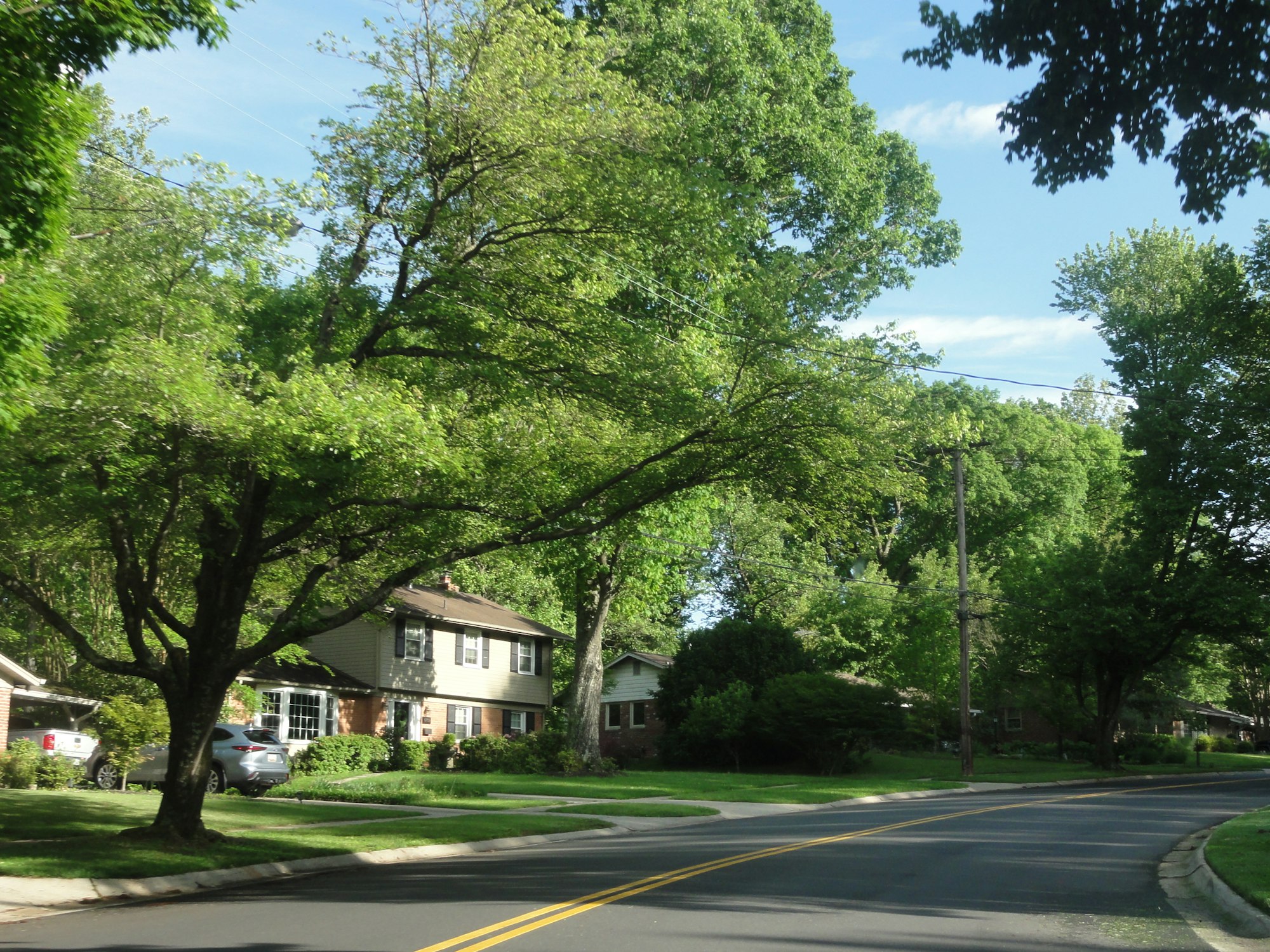
More than 65 years after Matt Jetton sold the first homes, Carrollwood continues to be one of Tampa Bay’s most sought-after neighborhoods. The 2020 Census counted 34,352 residents in the Carrollwood CDP, and the area has only grown since.
What makes Carrollwood stand out in today’s market:
- Mature Oak Canopy – Many oaks predate the development itself, providing shade and character that new construction cannot replicate
- Location – Easy access to Veterans Expressway, Dale Mabry, and major employment centers without the premium of South Tampa
- Cultural Diversity – One of Tampa Bay’s most diverse communities, reflected in restaurants, businesses, and community events
- School Quality – Sickles High School and multiple well-rated elementary and middle schools
- Price Range – Options from renovated condos in the mid-$200s to custom golf-course-fronting homes over $1 million
- Community Traditions – The Pirate Dance, started in 1963, continues as a beloved neighborhood event
What This History Means for Real Estate
Carrollwood’s history isn’t just interesting – it directly impacts real estate values and buying decisions today. Here’s what matters for buyers and sellers:
For Buyers: Original Carrollwood homes range from 1960s-era ranch homes (often available at lower price points, perfect for renovation) to fully rebuilt modern properties. The lot sizes are generally larger than what you’ll find in newer developments, and the tree canopy is irreplaceable. You’re buying 65 years of established character that no new subdivision can match. See current pricing in our Carrollwood housing market update.
For Sellers: Carrollwood’s history is a selling point. National awards, a planned community pedigree, and 65+ years of steady appreciation make a compelling narrative. Homes in the Original Village with golf course frontage or lake views command significant premiums. For a full cost of living breakdown, see our dedicated guide.
For Investors: The renovation opportunity in Original Carrollwood is real. Older ranch homes on large lots in a premium location with top schools – that’s a value-add investor’s dream. Tear down a 1,400 sq ft ranch and build a 3,000+ sq ft modern home, and you’re potentially looking at significant equity creation. Read more in our 2026 market outlook.
Frequently Asked Questions
Who founded Carrollwood?
Carrollwood was founded by developer Matt Jetton and his company, Sun State Homes (Sunstate Builders). Jetton purchased 325+ acres of citrus nursery land seven miles north of Tampa in the late 1950s. The first homes were sold in 1959.
How did Carrollwood get its name?
The community is named after Lake Carroll, the centerpiece of the original development. The lake itself was named in honor of Charles Carroll of Carrollton, a wealthy Maryland landowner and signer of the Declaration of Independence. The “wood” refers to the heavily wooded, oak-canopied character of the land.
Is Carrollwood part of the City of Tampa?
No. Carrollwood is unincorporated Hillsborough County. Residents receive county services (Hillsborough County Sheriff, county fire rescue) rather than City of Tampa services. This has been the case since Carrollwood was founded in 1959 and there are no current plans for annexation.
What is the population of Carrollwood?
The 2020 U.S. Census counted 34,352 residents in the Carrollwood census-designated place (CDP). The broader Carrollwood area, including North Carrollwood and surrounding neighborhoods, has a combined population significantly higher.
What is the difference between Carrollwood and Carrollwood Village?
Carrollwood Village refers specifically to the original 1959 master-planned community with deed restrictions, the Country Club, and Lake Carroll. The broader “Carrollwood” includes North Carrollwood and surrounding areas that developed primarily in the 1980s-1990s. Village homes tend to have larger lots, more mature trees, and a more established character. See our full comparison guide.
Is Carrollwood a good place to buy a home?
Carrollwood consistently ranks among Tampa Bay’s best neighborhoods for families, with strong schools, diverse dining, convenient location, and a 65-year track record of holding value. It offers a range of price points from the mid-$200s to over $1 million, making it accessible to many buyers. For an honest look at pros and cons, read our detailed analysis.
Related Articles







Explore Tampa Bay Communities
About Barrett Henry – Barrett Henry is a licensed real estate Broker Associate with REMAX Collective, serving Carrollwood and the Hillsborough County area. With deep local knowledge and an honest, data-driven approach, Barrett helps buyers and sellers make confident real estate decisions. Learn more
Disclosure: This article is for informational purposes only and does not constitute financial or legal advice. Historical details have been verified against available records but readers are encouraged to consult primary sources for academic research. Barrett Henry is a licensed real estate broker.
Last Updated: February 12, 2026
Need Help With Tampa Bay Real Estate?
Barrett Henry is a licensed Broker Associate with REMAX Collective serving the entire Tampa Bay market. Whether you are buying, selling, or investing – get straight talk and real data. No pressure, no games.
Schedule a Free Consultation Call (813) 733-7907