Quick Answer
What is an FHA 203(k) loan and can I use it to buy a fixer-upper in Tampa Bay?
Yes – the FHA 203(k) lets you buy a home that needs work and finance the purchase + renovations in one mortgage with as little as 3.5% down. It’s one of the best tools for first-time buyers who are priced out of move-in-ready homes across Tampa Bay. You can use it on single-family homes, condos, and even 2-4 unit properties for house hacking.
What Is an FHA 203(k) Loan?
An FHA 203(k) loan lets you buy a home that needs work and finance the purchase price + renovation costs in a single mortgage. Instead of getting a regular mortgage, then scrambling to find cash or a second loan for repairs, everything is rolled into one.
Here’s the basic idea:
- You find a home that needs updates, repairs, or a full renovation
- You get contractor bids for the work
- Your lender wraps the purchase price + renovation costs into one FHA-insured mortgage
- You close on the home, then the renovation work begins
- Renovation funds are held in escrow and released as work is completed
The loan is backed by the Federal Housing Administration (FHA), which means lenders take on less risk – which is why you can get in with as little as 3.5% down, even with imperfect credit.
I’ve seen buyers across Tampa Bay use the 203(k) to buy homes that other buyers walked away from – and end up with $30K-$80K in instant equity after the renovation. The key is understanding how the program works and having the right team.
Limited vs. Standard 203(k): Which One Do You Need?
There are two versions of the 203(k) loan, and choosing the right one matters. Pick wrong and you’ll either overpay in fees or hit a renovation cap you didn’t expect.
| Feature | Limited 203(k) | Standard 203(k) |
|---|---|---|
| Max Renovation | $35,000 | No cap (up to FHA loan limit) |
| Structural Work | Not allowed | Yes – additions, load-bearing walls, foundation |
| HUD Consultant | Not required | Required |
| Draw Schedule | One lump draw at completion | Multiple draws during construction |
| Timeline | Faster close – simpler process | Longer – 6-12 months for major renos |
| Best For | Cosmetic updates: kitchen, bath, flooring, paint | Gut rehabs, additions, major systems |
My Recommendation
Start with the Limited 203(k) if your renovation is under $35K. It’s faster, simpler, and doesn’t require a HUD consultant (which costs $400-$1,000+). Most of the fixer-uppers I see in Brandon and Riverview need $15K-$30K in cosmetic work – perfect for the Limited version.
If you’re looking at a full gut job – think knocking down walls, adding a bedroom, or replacing the entire plumbing system – you’ll need the Standard 203(k). It’s more paperwork, but the renovation budget is essentially unlimited up to the FHA loan limit for your county.
Why First-Time Buyers Love the 203(k)
If you’ve been house hunting in Tampa Bay and everything in your budget looks like it was last updated in 1997… you’re not alone. The 203(k) was literally designed for this situation.
The Advantages
- ? 3.5% down payment – based on total purchase + renovation amount. On a $250K purchase with $30K renovation, that’s about $9,800 down.
- ? Lower credit score requirements – 580 minimum for 3.5% down. Some lenders go to 500 with 10% down. Way more forgiving than conventional renovation loans.
- ? One loan, one payment – no juggling a first mortgage plus a home equity line or personal loan for repairs. One monthly payment covers everything.
- ? Built-in equity – you’re buying below market value and improving the home. The after-repair value often exceeds what you paid + renovation costs.
- ? Seller-paid closing costs – FHA allows sellers to contribute up to 6% of the sale price toward your closing costs. On a fixer-upper, sellers are often motivated.
- ? Gift funds allowed – your entire down payment can come from family gift funds. FHA is one of the few programs that allows this with zero borrower contribution.
The Downsides (Be Honest About These)
- ? Mortgage Insurance Premium (MIP) – FHA charges 1.75% upfront MIP (rolled into the loan) plus 0.55% annual MIP. On a $280K loan, that’s about $128/month. It never goes away unless you refinance to conventional.
- ? Longer closing timeline – expect 45-60 days minimum, sometimes 90+ for Standard 203(k). If you’re competing against cash buyers, this is a disadvantage.
- ? Contractor requirements – your contractor must be licensed, insured, and willing to work within FHA’s draw schedule and inspection process. Not every contractor wants to deal with it.
- ? FHA property standards – the home must meet certain minimum safety standards even before renovation. If the property is truly uninhabitable, FHA may not approve it.
- ? You must live there – this is an owner-occupied loan. You must move in within 60 days of completion and live there as your primary residence for at least 12 months.
What Repairs Can You Finance?
The 203(k) covers a surprisingly wide range of repairs and improvements. Here’s what you can and can’t include:
Eligible Repairs (Most Common in Tampa Bay)
- Roof replacement – one of the most common 203(k) repairs in Florida. Insurance companies won’t insure homes with roofs older than 15-20 years, so this is often a deal requirement.
- HVAC replacement – Florida heat kills old AC units. Budget $5K-$10K for a full system replacement.
- Kitchen remodels – cabinets, countertops, appliances, flooring. The #1 value-add renovation.
- Bathroom updates – vanities, tile, tub/shower, fixtures. Second biggest value-add.
- Flooring – replacing carpet, tile, or vinyl throughout
- Plumbing and electrical – updating old galvanized pipes or outdated wiring panels
- Windows and doors – energy efficiency + hurricane impact ratings
- Paint (interior and exterior)
- Structural repairs (Standard only) – foundation, load-bearing walls, additions
- Accessibility modifications – ADA compliance, wheelchair ramps
- Energy-efficient upgrades – solar panels, insulation, impact windows
NOT Eligible
- ? Swimming pools (cannot add a new pool)
- ? Outdoor kitchens and luxury hardscaping
- ? Commercial-use spaces
- ? Moving the home to a new foundation
- ? Any “luxury” improvement with no functional purpose
Pro tip: If you’re buying a home with an existing pool, you CAN use 203(k) funds to repair it. You just can’t build a new one.
Real Costs: What a 203(k) Actually Looks Like in Tampa Bay
Let me walk through a realistic example based on the current Tampa Bay market:
Example: Limited 203(k) in Brandon, FL
| Item | Amount |
|---|---|
| Purchase price | $250,000 |
| Renovation budget | $30,000 |
| Total loan amount | $280,000 |
| Down payment (3.5%) | $9,800 |
| Upfront MIP (1.75%) | $4,900 (rolled into loan) |
| Estimated monthly payment (6% rate, 30yr) | ~$1,710 P&I |
| Monthly MIP (0.55%) | ~$128/month |
| After-repair value (estimated) | $320,000-$340,000 |
| Instant equity | $40,000-$60,000 |
Add insurance ($350-$500/month), property taxes (~$275/month on $280K in Hillsborough County), and you’re looking at roughly $2,500-$2,700/month all-in. Compare that to the average Tampa Bay rent of $1,800-$2,100 – and you’re building equity instead of paying someone else’s mortgage.
Where the $30K Goes (Typical Cosmetic Renovation)
| Renovation Item | Estimated Cost |
|---|---|
| Kitchen remodel (mid-range) | $8,000-$12,000 |
| Bathroom update (x2) | $4,000-$8,000 |
| New flooring throughout | $4,000-$6,000 |
| Interior/exterior paint | $3,000-$5,000 |
| New appliances | $2,000-$4,000 |
| Contingency (10-15%) | $3,000-$4,500 |
The Step-by-Step 203(k) Process
The 203(k) process is more involved than a regular purchase, but it’s very doable if you understand the steps upfront. Here’s the timeline:
Step 1: Get Pre-Approved With a 203(k) Lender
This is the most important step. Not every lender does 203(k) loans, and experience matters enormously. You want a loan officer who has closed at least 10-20 of these. Ask them directly. I have lenders I work with across Tampa Bay who specialize in these – reach out and I’ll connect you.
Step 2: Find a Property With Renovation Potential
Look for homes priced below comparable move-in-ready homes in the same area. Red flags to avoid: foundation issues (unless doing Standard 203k), Chinese drywall, active sinkholes, or properties that are completely uninhabitable.
Step 3: Get Contractor Bids
You’ll need at least one detailed bid from a licensed, insured contractor. For Standard 203(k), a HUD-approved consultant will also create a work write-up. Get bids early – this is often the biggest bottleneck in the timeline.
Step 4: Appraisal (As-Is + After-Repair)
The FHA appraiser evaluates the property in its current condition AND estimates the after-repair value based on your renovation scope. The loan amount is based on the lower of: (a) purchase price + renovation, or (b) 110% of the after-repair appraised value.
Step 5: Underwriting and Closing
Once your loan is approved, you close like a normal purchase. Renovation funds are placed in an escrow account managed by the lender.
Step 6: Renovation Begins
Your contractor starts work. For the Limited 203(k), all work must be completed within 6 months. For Standard, the timeline is up to 12 months. Funds are released to the contractor as work is inspected and approved.
Step 7: Final Inspection and Move In
Once work is complete, a final inspection confirms everything was done according to the approved scope. Remaining escrow funds are released, and you’re in your newly renovated home.
House Hacking With a 203(k): 2-4 Unit Strategy
This is one of the most powerful wealth-building strategies available to first-time buyers, and almost nobody talks about it.
The FHA 203(k) can be used on 2-4 unit properties. That means you can:
- Buy a duplex, triplex, or fourplex that needs renovation
- Finance the purchase + renovation with 3.5% down
- Live in one unit as your primary residence
- Rent out the other units to offset your mortgage
Example: Duplex House Hack in Tampa
| Item | Amount |
|---|---|
| Duplex purchase price | $320,000 |
| Renovation budget (both units) | $50,000 |
| Total loan | $370,000 |
| Down payment (3.5%) | $12,950 |
| Monthly PITI + MIP | ~$3,200/month |
| Rental income (Unit B) | $1,500-$1,800/month |
| Your net housing cost | $1,400-$1,700/month |
That’s less than the average one-bedroom rent in Tampa – and you’re building equity in a multi-family investment property. After 12 months of owner-occupancy, you can move out and rent both units, turning it into a cash-flowing rental.
Best Tampa Bay Areas for 203(k) Fixer-Uppers
Not every area has the same 203(k) opportunity. Here’s where I’m seeing the best fixer-upper inventory and value-add potential across multiple markets:
| Area | Price Range (Fixer) | Why It Works |
|---|---|---|
| Brandon | $200K-$280K | Tons of 1980s-1990s homes needing cosmetic updates. Strong comps after renovation. |
| Riverview | $220K-$300K | Older sections near US-301 have affordable fixers. New construction nearby boosts comps. |
| Seminole Heights | $250K-$350K | Historic bungalows. Huge upside. Walkable to restaurants and bars. Gentrifying fast. |
| Plant City | $180K-$260K | Most affordable entry point in the Tampa Bay market. Older homes with large lots. |
| Town ‘N’ Country / West Tampa | $220K-$320K | Close to downtown Tampa and airport. Lots of duplexes for house hacking. |
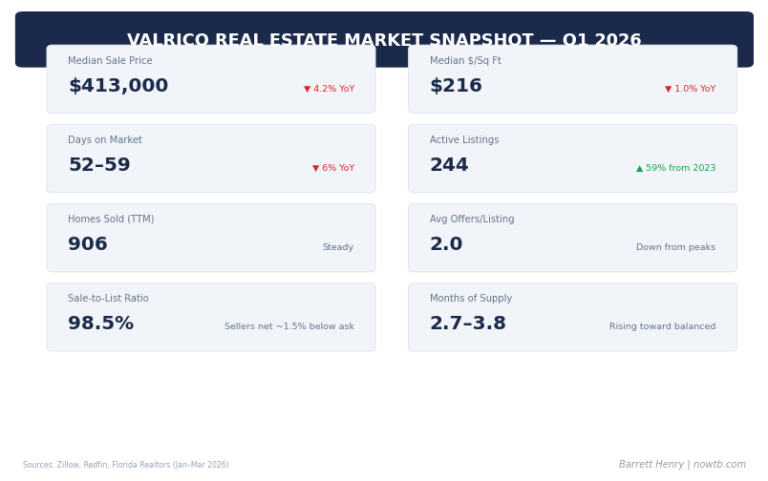
| Valrico | $240K-$320K | Great schools. Older homes in established neighborhoods. Families pay premium after reno. |
I work the entire Tampa Bay market – from South Tampa to Wesley Chapel to Apollo Beach. If you’re looking for 203(k) opportunities, I can set up a custom search that filters for properties with renovation potential in your target area. Let’s talk.
Common Mistakes That Kill 203(k) Deals
I’ve seen buyers lose deals, waste months, and spend thousands more than necessary because of these avoidable mistakes:
Mistake #1: Choosing the Wrong Lender
This is the #1 deal killer. If your lender doesn’t have specific 203(k) experience, they’ll make mistakes in processing that delay your closing by weeks or kill the deal entirely. Ask: “How many 203(k) loans have you closed in the past 12 months?” If the answer is less than 5, move on.
Mistake #2: Using a Contractor Who Won’t Play by FHA Rules
FHA has specific requirements: detailed bids, licensed and insured, willingness to work on a draw schedule (they get paid as work is inspected and approved, not all upfront). Many contractors don’t want to deal with the paperwork. You need one who does.
Mistake #3: Not Including a Contingency Reserve
FHA requires a 10-15% contingency reserve for the Limited 203(k) and 15-20% for Standard. Don’t fight this – once you open walls in a Florida home, you’ll almost always find surprises (old plumbing, termite damage, electrical issues). The contingency is your safety net.
Mistake #4: Underestimating the Timeline
Expect the full process – from offer to move-in – to take 3-5 months for Limited and 6-12 months for Standard. If you need to move in 30 days, the 203(k) isn’t for you. Plan accordingly.
Mistake #5: Overspending on Cosmetics, Ignoring Systems
A $15K kitchen looks great in photos, but if the roof leaks in two years, you’ve got a $20K problem. Prioritize: roof, HVAC, plumbing, electrical first. Then cosmetics. This also helps with insurance – a new roof alone can save you $1,000-$3,000/year in premiums.
FHA 203(k) vs. Other Renovation Loans
The 203(k) isn’t the only renovation loan option. Here’s how it compares:
| Loan Type | Down Payment | Credit Score | Best For |
|---|---|---|---|
| FHA 203(k) | 3.5% | 580+ | First-time buyers, lower credit, house hackers |
| Fannie Mae HomeStyle | 3-5% | 620+ | Higher credit buyers wanting to avoid MIP |
| VA Renovation Loan | 0% | 580+ | Veterans and active military |
| HELOC (after purchase) | N/A | 680+ | Already own the home, have equity |
| Cash + Conventional | 20%+ | 700+ | Investors, cash-heavy buyers |
For most first-time buyers in Tampa Bay, the FHA 203(k) is the clear winner. The low down payment, forgiving credit requirements, and ability to include renovation costs in the mortgage make it the most accessible path to homeownership – especially when move-in-ready homes are $50K-$100K above your budget.
If you’re a veteran, look into the VA renovation loan first – 0% down with no monthly mortgage insurance is hard to beat.
Frequently Asked Questions
What credit score do I need for an FHA 203(k)?
The FHA minimum is 580 for 3.5% down. Some lenders will go down to 500 with 10% down. In practice, most 203(k) lenders in Tampa Bay want to see at least a 620 for smoother processing, but 580 is absolutely doable with the right lender.
Can I do the renovation work myself (DIY)?
Generally no. FHA requires licensed, insured contractors for most work. Some limited “sweat equity” may be allowed for cosmetic items like painting, but the structural and systems work must be done by licensed professionals. Your lender will confirm what’s allowed.
How long does the whole process take?
From offer to move-in: expect 3-5 months for a Limited 203(k) and 6-12 months for Standard. The closing itself takes 45-60 days (longer than a conventional purchase), then renovation work begins after closing.
Where do I live during renovations?
For the Limited 203(k), many buyers live in the home during cosmetic renovations. For major renovations (Standard 203k), you may need temporary housing. FHA allows up to 6 months of mortgage payments to be included in the loan amount to cover this – ask your lender about this option.
Can I use a 203(k) on a condo?
Yes, but only if the condo project is FHA-approved. Many condos in Tampa Bay are not FHA-approved, which limits your options. Check the HUD condo lookup tool before falling in love with a unit.
What happens if the renovation goes over budget?
This is what the contingency reserve is for (10-15% of the renovation budget). If you exceed even the contingency, you’re responsible for the difference out of pocket. This is why accurate contractor bids and a solid inspection upfront are critical.
Can I use the 203(k) to flip a house?
No. The 203(k) is strictly for owner-occupied primary residences. You must live in the home for at least 12 months after renovation completion. After that, you can sell or convert it to a rental. It’s not a flipping tool – it’s a “buy, fix, live, build equity” tool.
What are the FHA loan limits in Tampa Bay for 2026?
For Hillsborough, Pasco, Pinellas, and Polk counties, the 2026 FHA loan limit for a single-family home is $524,225. For a duplex, it’s $671,200. For a triplex, $811,275. For a fourplex, $1,008,300. Your total 203(k) loan (purchase + renovation) cannot exceed these limits.
Next Steps: Is the 203(k) Right for You?
The FHA 203(k) might be right for you if:
- ? You’re a first-time buyer (or haven’t owned in 3+ years)
- ? Move-in-ready homes in your target area are above your budget
- ? You’re open to a fixer-upper and can handle a few months of renovation
- ? You want to build equity faster than buying at market value
- ? You’re interested in house hacking with a multi-family property
- ? You have limited savings but solid income
It’s probably NOT right if:
- ? You need to move in within 30 days
- ? You want a turnkey, no-hassle purchase
- ? You’re buying purely as an investor (no owner-occupancy)
- ? You have a 720+ credit score with 20% down (conventional may be better)
If you’re anywhere in Tampa Bay and want to explore 203(k) options, here’s what I recommend:
- Schedule a free buyer strategy call with me – I’ll assess your situation, budget, and timeline
- Get connected with a 203(k)-experienced lender – I have several I trust across Tampa Bay
- Start a custom property search – I’ll set up alerts for fixer-uppers in your target neighborhoods
Ready to Buy a Fixer-Upper in Tampa Bay?
I’ll help you find the right property, connect you with an experienced 203(k) lender, and guide you through every step of the renovation process.
Related Articles






Explore Tampa Bay Communities
About Barrett Henry – Barrett Henry is a licensed real estate Broker Associate with REMAX Collective, specializing in the Brandon, Riverview, Valrico, and greater Tampa Bay markets. With deep local knowledge and an honest, data-driven approach, Barrett helps buyers and sellers make confident real estate decisions. Learn more
Disclosure: This article is for informational purposes only and does not constitute financial or legal advice. Loan program details, rates, and limits change regularly – verify all information with a licensed mortgage lender before making decisions. Barrett Henry is a licensed real estate broker, not a mortgage lender.
Last Updated: March 2026
Need Help With Tampa Bay Real Estate?
Barrett Henry is a licensed Broker Associate with REMAX Collective serving the entire Tampa Bay market. Whether you are buying, selling, or investing – get straight talk and real data. No pressure, no games.
Schedule a Free Consultation Call (813) 733-7907