Quick Answer
Can you legally convert your garage in Florida?
Yes – garage conversions in Florida are legal but require building permits, must meet Florida Building Code for habitable space (windows, ventilation, egress), and may violate HOA rules in deed-restricted communities. Converting a garage typically costs $15,000-$30,000. Check HOA rules first, understand inspection requirements, and explore Tampa Bay homes for sale.
Garage conversions are one of the most common home improvement questions I get from Florida and Tampa Bay homeowners. Maybe you need a home office, an extra bedroom, or a place for aging parents. Maybe you never park in the garage anyway and you’re tired of wasting 400 square feet of air-conditioned potential on storage bins and holiday decorations. I’m Barrett Henry with REMAX Collective, and I’ve seen garage conversions done right – adding real value and livable space – and I’ve seen them done wrong, creating permit headaches, insurance problems, and resale nightmares. This guide covers everything Florida homeowners need to know before converting a garage: permits, costs, building code requirements, HOA restrictions, ROI, and the Florida-specific challenges that make this project different from doing it up north.
I see garage conversions show up constantly in inspections and appraisals across Tampa Bay and Florida, so I have had a front-row seat to what works – and what backfires – in our market.
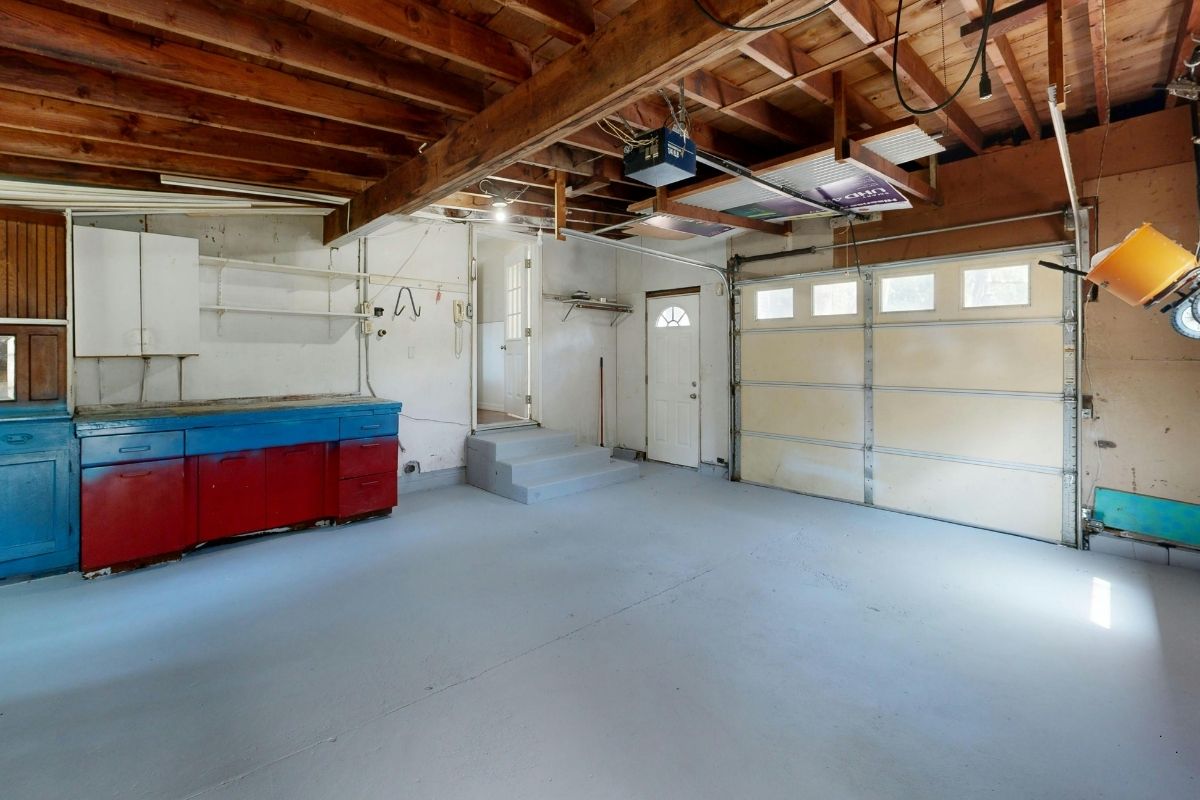
A typical Florida garage before conversion – exposed rafters, concrete floor, and garage door intact.
Before you start knocking out drywall, make sure you understand the rules. A garage conversion without proper permits can create serious problems when it comes time to sell – and in Hillsborough County, the building department doesn’t look the other way.
| Conversion Type | Estimated Cost | Permit Required? | Typical ROI |
|---|---|---|---|
| Home office | $5,000-$15,000 | Yes (if changing use) | 50-70% |
| Extra bedroom | $10,000-$25,000 | Yes | 50-65% |
| In-law suite / ADU | $20,000-$50,000+ | Yes | 40-60% |
| Home gym | $3,000-$10,000 | Depends on scope | 30-50% |
| Rental unit | $25,000-$60,000+ | Yes | Varies (rental income) |
| Playroom / media room | $5,000-$15,000 | Depends on scope | 30-50% |
Why Florida Homeowners Convert Garages
Florida is different from most of the country when it comes to garage use. Up north, you need the garage for winter – snow, ice, and freezing temperatures make covered parking essential. In Florida, most people use the garage as a giant storage closet and park in the driveway year-round. The car sits outside in the rain and sun, and the garage fills up with boxes, tools, lawn equipment, and everything else that doesn’t fit inside.
That makes the garage prime real estate for conversion. Here are the most common reasons I see Florida and Tampa Bay homeowners converting their garages (including Brandon, Riverview, Valrico, and similar suburbs):
- Need for more living space without the cost of an addition – A garage conversion is significantly cheaper per square foot than building a new room from the ground up because the shell (walls, roof, foundation) already exists.
- Remote work – The shift to working from home has been massive, and a dedicated home office separated from the main living area is worth its weight in gold for productivity and sanity.
- Aging parents or adult children – Multi-generational living is increasingly common. Converting a garage into an in-law suite gives family members privacy without paying for a second home or assisted living.
- Rental income – Some homeowners convert garages into rental units to offset their mortgage, though this comes with significant regulatory and zoning hurdles in Hillsborough County.
- Growing families – A fourth bedroom or a playroom for the kids is often cheaper to create from an existing garage than from a full home addition.
Hillsborough County Permit Requirements
Let me be direct: if you’re converting a garage into livable space in Hillsborough County, you almost certainly need a building permit. This isn’t optional, and skipping it is one of the most expensive mistakes a homeowner can make. Unpermitted work gets flagged during home inspections, creates title issues at closing, and can result in fines or forced removal of the work.
This section uses Hillsborough County as an example; other Florida counties follow similar principles but have their own permit offices and rules, so always check locally.
Here’s what triggers a permit requirement:
- Any change of use – Converting a garage to a bedroom, office, or living space is a change of use that requires a permit.
- Electrical work – Adding outlets, circuits, lighting, or an electrical subpanel requires an electrical permit.
- Plumbing work – Adding a bathroom, kitchenette, or any plumbing fixtures requires a plumbing permit.
- HVAC modifications – Extending your existing HVAC system or installing a new system for the converted space requires a mechanical permit.
- Structural modifications – Removing the garage door and framing a new wall, adding windows, or modifying load-bearing elements requires a building permit.
The permit process in Hillsborough County typically involves submitting plans to the Hillsborough County Building Services Department, paying permit fees (usually a few hundred dollars depending on project scope), passing multiple inspections during construction, and receiving a final inspection sign-off. The entire process can take 2-6 weeks for plan approval, depending on the complexity of the project and current backlog.
I’ve seen sellers lose thousands of dollars at the closing table because a buyer’s inspector flagged an unpermitted garage conversion. The buyer either walks away or demands a significant price reduction to cover the cost of bringing the work up to code. Don’t skip the permits.
Not sure if a past garage conversion at your address was permitted? I can usually check Hillsborough County public records and give you a straight answer before you spend money on plans. Ask me here or text me at (813) 733-7907.
HOA Restrictions and Considerations
If your home is in an HOA community – and in the Tampa Bay suburbs, more than half of them are – you need HOA approval before you touch the garage. Most HOAs require you to submit an Architectural Review Committee (ARC) request for any exterior modification, and a garage conversion almost always involves visible exterior changes like removing the garage door and replacing it with a wall, window, or entry door.
Common HOA concerns with garage conversions include:
- Exterior appearance – The HOA wants the conversion to look consistent with the rest of the neighborhood. A poorly finished garage-to-room conversion that’s obviously a converted garage will get denied or flagged for violations.
- Parking requirements – Many HOAs require that each home maintain a minimum number of covered or garage parking spaces. If your community requires a two-car garage and you convert it, you may be in violation regardless of how nice the conversion looks.
- Rental unit restrictions – If you’re converting the garage into a rental unit, most HOAs will not allow it. Check your CC&Rs thoroughly before investing in this type of conversion.
- Setback and lot coverage rules – Some HOAs have rules about maximum lot coverage or building setbacks that could be affected by how the conversion is executed.
My advice: submit the ARC request early and get written approval before you hire a contractor or pull permits. I cover HOA rules in depth in my Florida HOA Rules Guide.
Common Garage Conversion Types
Home Office
This is the most popular conversion I see, and it’s often the most straightforward. A dedicated home office in a converted garage gives you separation from the main living area, which matters if you’re on video calls all day or need quiet focus time. The basic scope includes insulating and finishing the walls and ceiling, leveling or upgrading the floor, adding appropriate electrical outlets and lighting, extending HVAC into the space, and replacing the garage door with a finished wall (with or without windows). Most home office conversions can be completed in 2-4 weeks.
Extra Bedroom
Converting a garage into a bedroom is common for growing families, but it comes with specific building code requirements. Florida Building Code requires that bedrooms have at least one egress window large enough for emergency escape, a closet (while not always code-required, appraisers and buyers expect it), smoke detectors, and proper ventilation. Adding a bedroom also means your home’s bedroom count increases on the property record, which can affect your property taxes and your home’s appraised value – usually in a positive way.
In-Law Suite
An in-law suite typically includes a bedroom area, a small bathroom, and sometimes a kitchenette. This is the most complex and expensive type of garage conversion because of the plumbing requirements. You’re running water lines, drain lines, and possibly a separate water heater into a space that was never designed for plumbing. The cost jumps significantly, but so does the utility – having a semi-independent living space for a family member can save tens of thousands in annual assisted living or rental costs.
Home Gym
A home gym conversion is one of the simpler projects if you’re keeping it basic. The main requirements are adequate flooring (rubber or impact-resistant), sufficient electrical capacity for equipment, good ventilation or HVAC, and potentially reinforced flooring if you’re using heavy free weights. Some homeowners keep the garage door functional so they can open it during workouts for airflow – this approach may not require a building permit if you’re not changing the use classification or making structural modifications, but check with the county first.
Rental Unit
Converting a garage into a rental unit is the most complicated option from a regulatory standpoint. Hillsborough County has specific zoning requirements for accessory dwelling units (ADUs), and not all properties qualify. You’ll need to verify that your zoning classification allows an ADU, meet all building code requirements for a habitable dwelling (including a full bathroom, kitchen facilities, separate entrance, and fire separation), and comply with local parking requirements. The investment property landscape in Tampa Bay is competitive, and rental income from a converted garage can be attractive – but only if the conversion is fully legal and permitted.

A garage-to-office conversion done right – finished walls, proper lighting, and a comfortable workspace.
Cost Breakdown by Conversion Type
Here’s a more detailed look at what each type of garage conversion typically costs in the Tampa Bay area. These numbers reflect 2020 contractor pricing for a standard two-car garage (roughly 400-500 square feet). Labor and material costs have moved significantly since then; many projects now land toward the upper end of these ranges or higher. Get current quotes before budgeting.
| Cost Category | Home Office | Bedroom | In-Law Suite | Gym |
|---|---|---|---|---|
| Garage door removal & wall framing | $1,500-$3,000 | $1,500-$3,000 | $1,500-$3,000 | $0 (keep door) |
| Insulation (walls & ceiling) | $1,000-$2,000 | $1,000-$2,000 | $1,000-$2,000 | $800-$1,500 |
| Drywall & finishing | $1,500-$3,000 | $1,500-$3,000 | $2,000-$4,000 | $1,000-$2,000 |
| Flooring | $1,000-$3,000 | $1,000-$3,000 | $1,500-$4,000 | $500-$1,500 |
| Electrical upgrades | $800-$2,000 | $800-$2,000 | $1,500-$3,000 | $500-$1,500 |
| HVAC extension | $1,500-$3,500 | $1,500-$3,500 | $2,000-$4,000 | $1,500-$3,000 |
| Plumbing (bathroom/kitchen) | N/A | N/A | $5,000-$12,000 | N/A |
| Windows & egress | $500-$1,500 | $800-$2,000 | $1,000-$2,500 | $0-$500 |
| Permits & inspections | $200-$500 | $300-$600 | $500-$1,000 | $100-$300 |
| Total Estimated Range | $5,000-$15,000 | $10,000-$25,000 | $20,000-$50,000+ | $3,000-$10,000 |
These costs can vary significantly based on the condition of the existing garage, the quality of finishes you choose, and your contractor’s pricing. Always get at least three quotes from licensed, insured contractors. In Florida, any project over $1,000 must be performed by a licensed contractor.
Florida Building Code Requirements for Garage Conversions
Florida’s building code has specific requirements for converting a garage into habitable space. These aren’t suggestions – they’re mandatory, and the building inspector will check every one of them before signing off on your permit.
Egress Windows
If the converted space will be used as a bedroom, Florida Building Code requires at least one emergency egress window. The window must have a minimum net clear opening of 5.7 square feet, a minimum opening height of 24 inches, a minimum opening width of 20 inches, and a maximum sill height of 44 inches above the finished floor. This is a life-safety requirement – no exceptions.
HVAC and Ventilation
Any habitable room in Florida must have mechanical ventilation or operable windows providing natural ventilation. In practice, given Florida’s heat and humidity, you need HVAC. Your options are extending your existing central system (if it has enough capacity), installing a ductless mini-split system (often the most cost-effective solution for garage conversions), or adding a window unit (not ideal, but technically compliant in some situations). Check with your HVAC contractor to determine whether your existing system can handle the additional load. An undersized system will struggle to cool both the existing house and the new space.
Electrical
Habitable rooms require adequate electrical outlets – generally one receptacle outlet for every 12 feet of wall space, with no point along any wall more than 6 feet from an outlet. You’ll also need proper lighting, GFCI protection in any areas near water (bathrooms, kitchenettes), and AFCI protection on bedroom circuits. Most garage electrical systems were designed for a few outlets and a light – you’ll almost certainly need an electrical upgrade.
Insulation
Florida energy code requires that habitable spaces meet minimum insulation values. Most garages in Tampa Bay are uninsulated or minimally insulated. You’ll need to add insulation to the walls (minimum R-13 for frame walls) and ceiling (minimum R-30 for the attic above, if applicable). Proper insulation isn’t just about code compliance – it’s about keeping the space comfortable and keeping your electric bill from skyrocketing.
Flooring
Garage floors are typically bare concrete that slopes toward the garage door for drainage. Converting to habitable space usually means leveling the floor (self-leveling compound works well), adding a moisture barrier, and installing finished flooring. The step-down from the house into the garage also needs to be addressed – you may need to raise the garage floor to match the interior floor level, or install a proper transition.
Fire Separation
If any portion of the garage remains as a garage (for example, converting only half of a two-car garage), you must maintain proper fire separation between the garage and the living space. This typically means fire-rated drywall, a self-closing door, and no direct openings between the garage and sleeping areas.

A garage-to-gym conversion with fitness equipment, natural light, and finished flooring.
Pros and Cons of Converting Your Garage
Pros
✓ More affordable than a traditional addition. The structure already exists – walls, roof, and foundation are in place. You’re finishing an existing space rather than building from scratch, which cuts costs significantly.
✓ Faster construction timeline. Most garage conversions can be completed in 3-8 weeks, compared to 3-6 months for a home addition.
✓ Adds usable square footage. A two-car garage conversion adds 400-500 square feet of climate-controlled living space. That’s meaningful, especially in Florida homes that tend to be built compact.
✓ Solves immediate space needs. Whether it’s a home office, an extra bedroom, or a space for a family member, a garage conversion directly addresses the need without moving to a larger home.
✓ Can increase property value when done properly. A permitted, well-finished garage conversion that adds a bedroom or livable square footage can increase your home’s appraised value.
✓ Multi-generational flexibility. An in-law suite conversion provides semi-independent living space that keeps family close without sacrificing everyone’s privacy.
Cons
✗ You lose garage storage and parking. This is the biggest trade-off. Florida homes don’t have basements, so the garage is often the only large storage area. You’ll need to figure out where all that stuff goes – and where you’ll park your cars.
✗ ROI is typically lower than other renovations. Kitchen and bathroom remodels tend to return more at resale. Garage conversions average 50-65% ROI, meaning you won’t get all your money back.
✗ Can hurt resale with certain buyers. Some buyers specifically want a garage. Families with multiple cars, hobbyists, and buyers relocating from areas where garage parking is standard may pass on a home without one.
✗ HOA complications. If your community requires garage parking, you may not be allowed to convert regardless of the quality of the work. Violations can result in fines and forced restoration.
✗ Permit and code compliance costs add up. Between permits, inspections, bringing the space up to habitable standards (insulation, HVAC, electrical, egress), and finishing work, the cost is higher than many homeowners initially expect.
✗ Florida humidity challenges. Garages are not designed to be climate-controlled, and moisture management is a real concern in Florida. Inadequate insulation, vapor barriers, or HVAC can lead to mold and mildew problems.
Is a Garage Conversion a Good Idea in Your Neighborhood?
In some Florida and Tampa Bay neighborhoods, losing the garage can hurt more than it helps; in others, a well-done conversion solves the exact problem buyers have with smaller 70s/80s floor plans.
- In starter and first-move-up communities where most homes still have usable 1-2 car garages and shorter driveways, many buyers would rather have secure parking and storage than an extra room that replaced the garage.
- In older ranch neighborhoods with compact interiors but decent driveways or side yards, converting part or all of the garage into a true office, 4th bedroom, or in-law space can make the home feel more like what 2026 buyers expect.
- In HOA communities that require garage parking, a conversion is usually a bad idea once you factor in the risk of violations, forced reversal, or a smaller buyer pool.
If you tell me your neighborhood and rough price range, I can usually tell you in a paragraph or two whether a conversion is likely to help or hurt your resale locally. Just ask – no charge.
Impact on Home Value and Resale
This is where I need to be honest with you, because the internet is full of articles claiming garage conversions are a guaranteed way to increase your home’s value. The reality is more nuanced.
A permitted garage conversion that adds a bedroom and bathroom can increase your home’s appraised value because it adds livable square footage and bedroom count – both of which directly affect comps. However, the increase in value is almost never equal to what you spent on the conversion. Typical ROI is in the 50-65% range, meaning if you spend $25,000 on the conversion, you might add $12,500-$16,250 in home value.
There are also situations where a garage conversion can actually hurt your resale value:
- Unpermitted work – If the conversion wasn’t permitted, it creates a liability for the next buyer. Many buyers will walk away, and those who don’t will demand a price reduction.
- Poor quality finishes – A conversion that looks like a converted garage – mismatched flooring, visible seams where the garage door was, lower ceiling height than the rest of the house – detracts from the home’s appeal.
- Market preference for garages – In neighborhoods where most homes have garages, being the one without can narrow your buyer pool. Families with two or three cars, buyers who want workshop space, and people with boats or recreational equipment need garage space.
- Loss of storage – Florida homes don’t have basements. Losing the garage means losing the primary storage area, which is a meaningful negative for many buyers.
My advice: if you’re converting the garage primarily for personal use and plan to stay in the home for 5+ years, the value is in the utility you get from the space – not the resale return. If you’re converting specifically to boost resale value, there are usually better investments.
In many Florida suburbs the same pattern holds: you rarely get dollar-for-dollar ROI on a garage conversion compared with kitchens, baths, or exterior curb appeal projects. Check out my guide to selling your home in Brandon FL for renovation tips that deliver better returns.
Thinking about selling in the next 2-3 years? Before you spend $20K+ on a conversion, I can run the numbers for your specific neighborhood and show you what buyers there actually pay more for. It might be the conversion – or it might be a kitchen update or pool. Get a free opinion or text (813) 733-7907.
Buying a Home With an Existing Garage Conversion?
I see a lot of buyers fall in love with an extra “bonus room” or “in-law space” and only later find out it was a garage conversion with problems.
- First thing I check is permits and county records. If the conversion does not show up as finished living area, we treat it as a liability until we know why.
- We look at basic safety and code items: egress, ceiling height, electrical, HVAC load, and moisture control. A nice-looking space with hidden issues can be more expensive than building it right from scratch.
- If the layout is awkward (bedroom off the kitchen, no privacy, no closet), we talk frankly about how future buyers and appraisers will see it and whether it makes more sense to walk away or use it as leverage on price.
If you are eyeing a Florida home with a garage conversion, send me the address or listing link and I will give you a quick opinion on the conversion before you write an offer. Send it here or text (813) 733-7907.
Insurance Implications
Converting your garage affects your homeowners insurance, and you need to notify your carrier before starting the project. Here’s what changes:
- Increased dwelling coverage – Adding livable square footage increases the replacement cost of your home. Your dwelling coverage (Coverage A) needs to reflect the new, higher replacement value. Failing to update your coverage means you could be underinsured.
- Liability exposure – If you’re renting the converted space to a tenant, your liability exposure increases significantly. You may need a landlord policy or a rider on your existing policy.
- Unpermitted work and claims – If you file a claim related to the converted space and the work wasn’t permitted, your carrier may deny the claim. Insurance companies verify permits during the claims process, and unpermitted work is a common reason for claim denial.
- Premium increase – Expect a modest premium increase to reflect the additional living space. The increase is typically proportional to the square footage added – usually $100-$300 per year.
I go into more detail about how renovations affect your policy in my Florida Homeowners Insurance Guide. The short version: call your insurance agent before you start, not after.
Florida-Specific Challenges
Humidity and Moisture Control
This is the number-one concern with garage conversions in Florida. Garages are designed as unconditioned spaces – they’re not sealed, insulated, or dehumidified the way the rest of your house is. When you convert a garage to living space, you need to make it airtight and climate-controlled, or you’ll be fighting mold and mildew within months. Proper vapor barriers, insulation, and an appropriately sized HVAC system are non-negotiable.
Flood Zone Considerations
If your property is in a FEMA flood zone, converting the garage to living space can affect your flood insurance requirements and costs. Garages below the base flood elevation are sometimes acceptable as non-living space, but converting them to habitable space may require flood-proofing or could increase your flood insurance premium. Check your flood zone designation and talk to your insurance agent before proceeding.
Parking Requirements
Hillsborough County requires a minimum number of off-street parking spaces for residential properties – typically two spaces per dwelling unit. If you convert your garage, you still need to maintain the required parking. That usually means your driveway needs to accommodate at least two cars. If your driveway is short or if the conversion reduces your available parking below the minimum, the county may not approve the permit.
Concrete Slab Issues
Florida garage slabs are poured with a slope toward the garage door for drainage. That slope needs to be addressed when converting to living space – nobody wants a bedroom floor that tilts toward one wall. Self-leveling compound is the standard solution, but severe slopes may require more extensive work. The slab also needs a moisture barrier before any finished flooring is installed, because Florida’s water table and humid soil push moisture through concrete year-round.
Frequently Asked Questions About Garage Conversions in Florida
Do I need a permit to convert my garage in Florida?
Yes, in almost every case. Any conversion that changes the use of the space from a garage to habitable living area requires a building permit in Hillsborough County. This includes changes to electrical, plumbing, HVAC, and structural elements. Cosmetic-only changes (like painting the walls without changing the use) may not require a permit, but that’s a narrow exception. Always check with the county building department before starting work.
How much does it cost to convert a garage in Florida?
Costs range from $3,000 for a basic gym or workshop conversion to $50,000 or more for a full in-law suite with a bathroom and kitchenette. The most common conversions – home offices and extra bedrooms – typically fall in the $8,000-$20,000 range for a two-car garage in the Tampa Bay area. The biggest cost variables are whether you need plumbing, the quality of finishes, and the condition of the existing garage.
Will a garage conversion increase my property taxes?
It can. When you pull a permit for a garage conversion, the county is notified of the improvement. The property appraiser may reassess the property’s value based on the added livable square footage, which could increase your assessed value and your tax bill. The increase is typically proportional to the value added – if the conversion adds $15,000 in value and your effective tax rate is 2%, expect roughly $300 more per year in property taxes.
Can I convert my garage back later if I want to?
Yes, but it’s not cheap. Reverting a garage conversion means reinstalling a garage door, removing finished walls and flooring, regrading the concrete slab for drainage, and updating the permits and property records. It typically costs $5,000-$15,000 to undo a conversion, depending on how extensively the space was modified. Some homeowners plan ahead by keeping the garage door header intact and designing the conversion to be more easily reversible.
Is it better to convert the garage or build an addition?
It depends on your budget and priorities. A garage conversion is cheaper (typically 40-60% less than a comparable addition) and faster. But you lose the garage. A home addition preserves the garage and adds new square footage, but costs $150-$250 per square foot in Tampa Bay – meaning a 400-square-foot addition could run $60,000-$100,000. If budget is the priority and you can live without the garage, conversion is usually the better move.
Can I turn my garage into a legal rental unit?
Potentially, but the regulatory requirements are significant. You’ll need to verify that your property’s zoning allows an accessory dwelling unit (ADU), meet all building code requirements for a separate dwelling unit, obtain all necessary permits, and comply with your HOA’s rules if applicable. Not all properties in Hillsborough County are zoned for ADUs. Start by checking with the county’s zoning department before investing in plans or contractor quotes.
What’s the best HVAC option for a garage conversion?
A ductless mini-split system is the most popular choice for garage conversions in Florida. It provides both heating and cooling, doesn’t require ductwork, is energy efficient, and can be installed without major modifications to your existing HVAC system. A mini-split for a single-car or two-car garage conversion typically costs $2,500-$4,500 installed. Extending your existing central system is another option if your current unit has enough capacity, but adding ductwork to the garage can be more complex and expensive.
Sources
- Hillsborough County Building Services – Permits and Inspections
- Florida Building Commission – Florida Building Code
- Florida Realtors
- National Association of Realtors – Remodeling Impact Report
- Hillsborough County Property Appraiser records
- Local contractor estimates and project data from the Tampa Bay market
- Hillsborough County zoning and permitting data through 2026
Thinking About a Garage Conversion?
Whether you’re looking to add a home office, create space for a family member, or just make better use of your garage, I can help you think through the decision from a real estate perspective. I’ll tell you how a conversion might affect your home’s value, what buyers in your neighborhood expect, and whether the investment makes sense for your situation. If you’re buying a home and considering one with an existing garage conversion, I’ll check the permits, inspect the quality, and make sure the work was done right.
If your home is outside my daily service area in Tampa Bay, I can still help you think through the numbers and connect you with a good local agent anywhere in Florida so your garage conversion decision makes sense for both your life and your resale value.
Barrett Henry | REMAX Collective
Direct: (813) 733-7907
Email: [email protected]
Website: NOWtb.com
Call, text, or email anytime. No pressure, no obligation – just straight advice from someone who’s seen what works and what doesn’t in the Tampa Bay market.
About the Author: Barrett Henry is a licensed real estate agent with REMAX Collective, specializing in residential real estate across the greater Tampa Bay area (Tampa, St. Petersburg, Clearwater, Largo, Brandon/Valrico, Riverview, Bradenton, and surrounding communities). He helps buyers and sellers navigate every aspect of the transaction – including the renovation and improvement decisions that affect home values and livability.
Related Guides You Might Find Helpful
Related Articles






Explore Tampa Bay Communities
About Barrett Henry – Barrett Henry is a licensed real estate Broker Associate with REMAX Collective, specializing in the Brandon, Riverview, Valrico, and greater Tampa Bay markets. With deep local knowledge and an honest, data-driven approach, Barrett helps buyers and sellers make confident real estate decisions. Learn more
Disclosure: This article is for informational purposes only and does not constitute financial or legal advice. Market data is approximate and subject to change. Always consult with a qualified real estate agent, lender, or attorney for your specific situation.
Last Updated: March 12, 2026
Need Help With Tampa Bay Real Estate?
Barrett Henry is a licensed Broker Associate with REMAX Collective, serving the entire Tampa Bay market. Whether you are buying, selling, or investing – get straight talk and real data. No pressure, no games.
Schedule a Free Consultation Call (813) 733-7907