If you're shopping for a home in Brandon, FL, there's a good chance a pool is on your wish list - and for good reason. We live in a part of Florida where you can realistically use a pool 8 to 10 months out of the year, and a well-maintained pool home can be one of the best lifestyle upgrades you make. But pool homes come with real costs, maintenance obligations, insurance considerations, and inspection nuances that catch buyers off guard if they're not prepared. I'm Barrett Henry with REMAX Collective, and I've helped dozens of families buy and sell pool homes across Brandon, Valrico, and Riverview. This guide covers everything you need to know before you make an offer on a pool home - the good, the bad, and the expensive.
How Much Do Pool Homes Cost in Brandon FL?
The short answer: pool homes in Brandon typically sell for $30,000 to $80,000 more than comparable non-pool homes in the same neighborhood. The premium varies depending on pool condition, whether the pool is screened, the size of the backyard, and the overall price point of the community. In lower-priced neighborhoods, the premium tends to be a smaller dollar amount but a larger percentage of the home's value. In higher-priced communities like FishHawk Ranch or Bloomingdale, the dollar premium is larger but represents a smaller percentage of the sale price.
Here's what the price difference looks like across several popular Brandon-area neighborhoods as of early 2026. These are approximate median sale prices for comparable 3-4 bedroom single-family homes.
| Neighborhood | Median Price (No Pool) | Median Price (With Pool) | Approximate Premium |
|---|---|---|---|
| Brandon Proper (33510/33511) | $310,000-$340,000 | $355,000-$400,000 | $40,000-$60,000 |
| Bloomingdale | $360,000-$420,000 | $410,000-$490,000 | $50,000-$70,000 |
| Valrico (33594/33596) | $375,000-$450,000 | $425,000-$530,000 | $50,000-$80,000 |
| Riverview (South of Brandon) | $310,000-$380,000 | $350,000-$440,000 | $40,000-$60,000 |
| FishHawk Ranch | $450,000-$600,000 | $510,000-$680,000 | $60,000-$80,000 |
| Lake Brandon / Heather Lakes | $340,000-$420,000 | $385,000-$480,000 | $45,000-$60,000 |
One important thing to understand: pools don't always return 100% of their cost at resale. A pool that cost $60,000 to install might add $40,000-$50,000 to the home's sale price - sometimes more, sometimes less. Buyers in the $500K+ range tend to expect a pool, so the premium matters less there. In the $300K range, a pool can actually narrow your buyer pool (no pun intended) because some buyers don't want the maintenance burden. I factor all of this into my pricing analysis when I list a pool home.
What Does It Cost to Maintain a Pool in Florida?
This is the question every first-time pool home buyer should ask - and most don't until after they've closed. Pool ownership in Florida is not cheap. Between chemicals, electricity for the pump, cleaning, and periodic repairs, you're looking at $150 to $350 per month in ongoing costs depending on how you manage it. Here's a realistic monthly breakdown.
| Expense | DIY Cost (Monthly) | Professional Service (Monthly) | Notes |
|---|---|---|---|
| Chemicals (chlorine, acid, shock, stabilizer) | $30-$50 | Included in service | Saltwater pools have lower chemical costs |
| Pool Pump Electricity | $40-$80 | $40-$80 | Variable-speed pumps save 50-70% |
| Pool Heater (gas or heat pump) | $50-$150 (seasonal) | $50-$150 (seasonal) | Only if heated; Oct-Mar usage |
| Weekly Cleaning Service | $0 (you do it) | $100-$175 | Includes skimming, brushing, chemical balancing |
| Filter Cleaning / Replacement | $10-$20 | Usually included | Cartridge filters need cleaning every 4-6 weeks |
| Minor Repairs (annually, averaged) | $20-$40 | $20-$40 | Gaskets, o-rings, small equipment fixes |
| Total Estimated Monthly Cost | $150-$340 | $260-$525 |
Beyond monthly costs, there are larger periodic expenses that hit every pool owner eventually:
- Pool resurfacing (marcite/plaster): $5,000-$10,000 every 7-12 years
- Pool resurfacing (pebble/quartz): $8,000-$15,000 every 12-20 years
- Pool pump replacement: $800-$2,500 (every 8-12 years)
- Pool heater replacement: $2,500-$5,000 (every 7-12 years)
- Screen enclosure rescreening: $2,000-$6,000 (every 7-15 years, or after a hurricane)
- Screen enclosure structural repair/replacement: $8,000-$20,000+ (if damaged by storms)
- Pool tile repair or replacement: $500-$3,000
- Salt cell replacement (saltwater pools): $600-$1,200 every 3-7 years
I tell every buyer: budget an extra $200-$300 per month on top of your mortgage payment for pool ownership. If you're handy and willing to learn pool chemistry, you can get that closer to $150. If you hire everything out, plan for $300+. Either way, it's a real line item in your monthly budget, and your lender won't factor it in - you have to.
Types of Pools You'll Find in Brandon FL
Not all pools are created equal, and the type of pool in a home you're considering will affect your maintenance costs, comfort, and long-term expenses. Here's what you'll encounter in the Brandon market.
Screened vs. Unscreened Pools
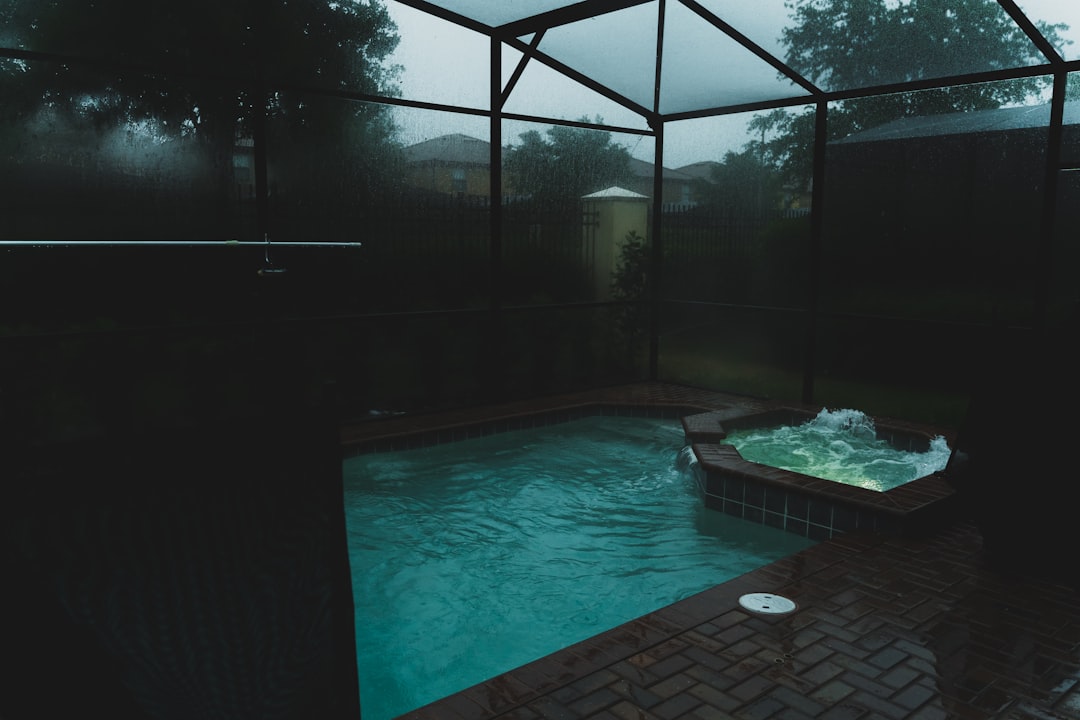
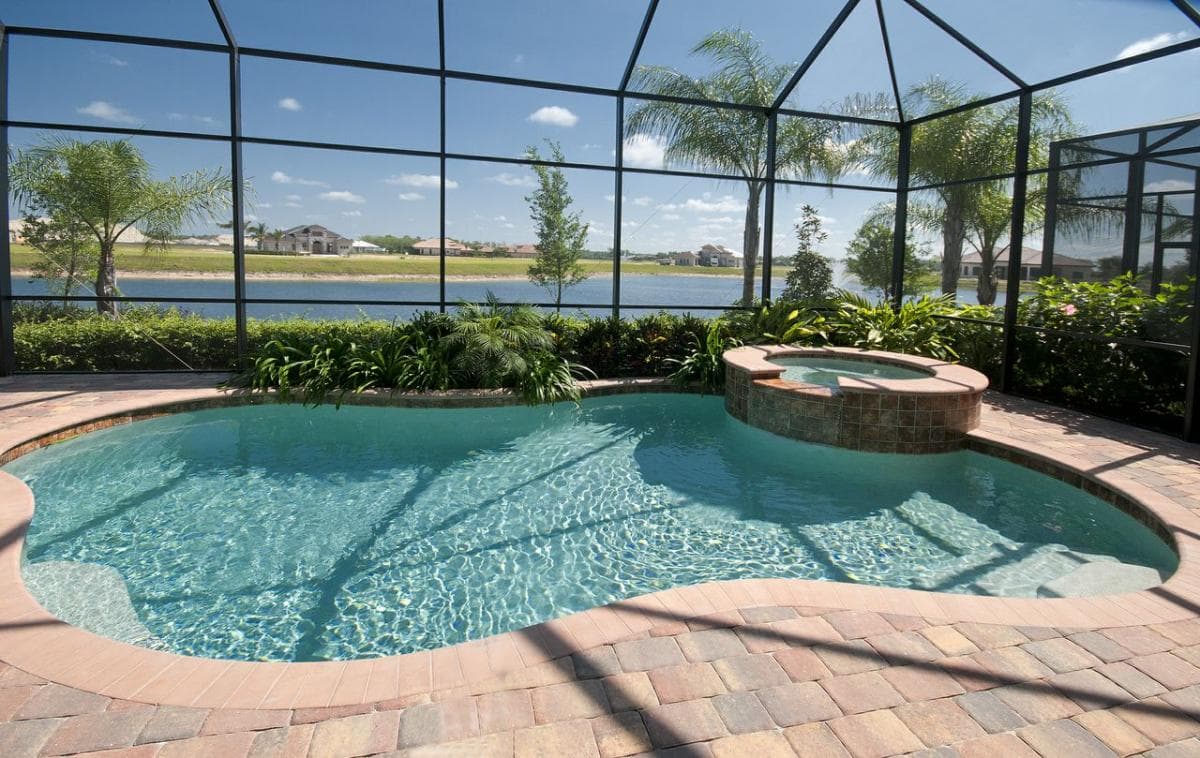
The vast majority of pools in the Brandon area are screened - meaning they're enclosed within an aluminum-framed screen enclosure (what locals call a "pool cage" or "lanai"). This is standard in Florida for good reason: screen enclosures keep out bugs, reduce debris in the pool, and meet certain safety barrier requirements under Florida building code. An unscreened pool is relatively uncommon in this market, and most buyers specifically want a screened pool. If you're looking at a home with an unscreened pool, factor in $15,000-$30,000+ to add an enclosure, depending on the size.
Saltwater vs. Chlorine Pools
Saltwater pools have become increasingly popular in the Brandon area over the past decade. A saltwater system uses a salt chlorine generator (salt cell) to produce chlorine from dissolved salt - you're still swimming in chlorinated water, but the chlorine levels tend to be lower and more consistent. The water feels softer and is easier on your skin and eyes. The trade-off: salt cells cost $600-$1,200 to replace every 3-7 years, and saltwater can be corrosive to certain pool equipment, stone coping, and screen enclosure hardware if not properly maintained. Traditional chlorine pools are simpler and have lower upfront equipment costs, but require more frequent chemical balancing.
Concrete/Gunite vs. Vinyl Liner Pools
In the Brandon area, the overwhelming majority of in-ground pools are concrete (gunite or shotcrete) construction with a plaster, pebble, or quartz finish. This is the Florida standard - durable, customizable, and built to last decades with proper resurfacing. Vinyl liner pools exist but are uncommon here. If you encounter a vinyl liner pool, be aware that liners need replacement every 5-9 years at a cost of $3,000-$7,000, and they're more susceptible to punctures and tears. Fiberglass pools are gaining traction in new construction but are still a small percentage of the existing inventory.
Heated vs. Unheated Pools
An unheated pool in the Tampa Bay area is swimmable from roughly April through October. If you want to use your pool year-round - and many families do - you'll need a heater. The two main options are gas heaters (fast heating, higher operating cost) and electric heat pumps (slower heating, lower operating cost). A heat pump is the more common and cost-effective choice in Florida. Running a heat pump during the cooler months (November through March) typically adds $50-$150 per month to your electric bill. If the pool home you're eyeing doesn't have a heater, installing one costs $2,500-$5,000 for a heat pump or $1,500-$3,500 for a gas heater plus gas line installation if one doesn't exist.
Best Neighborhoods for Pool Homes in Brandon FL
Some Brandon-area neighborhoods have significantly higher concentrations of pool homes than others. If a pool is a must-have on your list, focusing your search in these communities will give you the best selection. Here's where I see the most pool homes hit the market.
Bloomingdale
Bloomingdale has one of the highest percentages of pool homes in the Brandon area. Many homes here were built on lots specifically designed to accommodate pools, and the community's mature landscaping provides great privacy. Most pools in Bloomingdale are screened, concrete/gunite, and many have been resurfaced at least once given the neighborhood's 1985-2005 build dates. This is a strong option if you want a pool home with A-rated schools. For more on this community, check out my guide to the best neighborhoods in Brandon for families.
Valrico (Buckhorn / Lithia Pinecrest Corridor)
Valrico's larger lots make it a natural fit for pool homes. Neighborhoods along the Buckhorn Road and Lithia Pinecrest corridors frequently feature quarter-acre to half-acre lots with screened pools. Many of these are custom or semi-custom homes where the pool was part of the original build. If you want a pool and a big backyard, Valrico is where to look. My Brandon vs. Riverview vs. Valrico comparison breaks down the differences between these communities in detail.
FishHawk Ranch (Lithia)
FishHawk is a master-planned community with a high concentration of pool homes, especially in the Starling, Osprey, and Palms at FishHawk Ranch sections. Many homes here were built with pools from the start, and the larger floor plans (2,000-4,000+ sq ft) typically sit on lots that accommodate a good-sized pool and pation area. Keep in mind that FishHawk has HOA and CDD fees that add $250-$500 per month - on top of your pool maintenance costs.
Riverview (Boyette / Panther Trace / Summerfield)
Riverview neighborhoods south of Brandon - particularly Panther Trace, Summerfield, and communities along the Boyette Road corridor - offer newer pool homes at slightly lower price points than Bloomingdale or FishHawk. Many of these were built in the 2010s and 2020s, so you may find pools with relatively new surfaces and equipment. The trade-off is smaller lots in some of the newer subdivisions, which means smaller pools.
Lake Brandon / Heather Lakes / La Collina
These established Brandon neighborhoods have a solid mix of pool homes, and because the communities are mature (1990s-2000s construction), you'll find many owners who have already invested in pool upgrades like pebble resurfacing, saltwater conversions, and newer pump equipment. Prices here offer a good middle ground between Brandon proper and the premium communities. My La Collina guide covers that community in depth.
Insurance and Safety Considerations for Pool Homes
Owning a pool in Florida comes with specific insurance and legal responsibilities. This is an area where I see buyers get surprised, so let's cover it thoroughly.
How a Pool Affects Your Homeowners Insurance
Having a pool will increase your homeowners insurance premium. The exact amount varies by carrier, but expect an increase of $100 to $500 per year depending on the pool type, whether it's fenced or screened, and whether you have additional safety features like an alarm or self-closing gate. Some carriers also ask about diving boards, slides, and trampolines - these can increase your premium further or even trigger an exclusion. When you're evaluating a pool home, get an insurance quote before you make an offer so you know the real number. Florida insurance is already expensive, and the pool adds to it.
Florida Pool Fence and Barrier Laws
Florida law (Florida Statute 515.27, the Residential Swimming Pool Safety Act) requires at least one of the following safety features for residential pools:
- A pool barrier (fence or screen enclosure) at least 4 feet high with a self-closing, self-latching gate
- An approved safety pool cover
- An exit alarm on all doors and windows with direct pool access
- A combination of the above
In practice, most Brandon homes with screened pools meet the barrier requirement through the screen enclosure itself - the enclosure frame and screen door with a self-closing latch satisfy the code. If a pool is unscreened, a separate fence around the pool area is required. Hillsborough County building inspectors enforce these requirements, and your insurance company will verify compliance as well. If you're buying a home where the screen enclosure is damaged or the gate latch is broken, those are items that need to be repaired before closing - and I always flag them during the inspection process.
Liability Considerations
A pool increases your liability exposure as a homeowner. Florida's "attractive nuisance" doctrine means you have a heightened duty of care regarding children - even uninvited ones - who might access your pool. Make sure your homeowners insurance includes adequate liability coverage. Most standard policies offer $100,000-$300,000 in liability coverage; I recommend pool owners carry at least $300,000, and many opt for an umbrella policy ($1 million+) that costs $150-$300 per year. It's a small price for the coverage it provides. Your flood insurance is a separate policy that does not cover pool liability - these are distinct coverages.
Pros and Cons of Buying a Pool Home in Brandon FL
I always give my clients the honest version of this list. A pool is a lifestyle feature - it can be wonderful, but it's not for everyone.
Pros
- ✓ Year-round outdoor living: Florida's climate means 8-10 months of pool use, and year-round with a heater
- ✓ Family entertainment at home: Kids will always choose the pool over screen time, and you'll host more gatherings
- ✓ Exercise and wellness: Swimming is low-impact exercise that's especially valuable in Florida's heat
- ✓ Increased home value: Pool homes sell for $30,000-$80,000 more in the Brandon market
- ✓ No HOA pool crowds: Your own pool means no waiting for a lane, no guest policies, no limited hours
- ✓ Screened lanai living space: The pool enclosure essentially adds a usable outdoor room to your home
- ✓ Cooling off is 30 seconds away: In August, when it's 95 degrees at 4 PM, this matters more than you think
Cons
- ✗ Ongoing maintenance costs: $150-$350+ per month in chemicals, electricity, cleaning, and repairs
- ✗ Higher insurance premiums: Expect $100-$500 more per year for homeowners insurance
- ✗ Safety liability: Increased legal responsibility, especially with children in the home or neighborhood
- ✗ Reduced yard space: A pool and screen enclosure consume a significant portion of the backyard
- ✗ Major periodic expenses: Resurfacing ($5,000-$15,000), screen repair ($2,000-$6,000), equipment replacement
- ✗ Time commitment: Even with a pool service, you'll spend time managing the pool, scheduling repairs, and monitoring water quality
- ✗ Screen enclosure vulnerability: Florida storms and hurricanes can damage or destroy pool cages - replacement costs are significant
- ✗ Narrower buyer pool at resale: Some buyers actively avoid pool homes, especially in the entry-level price range
My honest take: if your family will use the pool regularly, the lifestyle benefits outweigh the costs for most people. If you're buying a pool home because you think it's a good investment but don't plan to actually swim in it, you're taking on all the costs with none of the enjoyment. Be honest with yourself about how you'll use it.