Primary Routes Out of St. Petersburg FL
I-275 / Howard Frankland Bridge (to Tampa)
I-275 is the main artery connecting St. Petersburg to Tampa across Tampa Bay. The Howard Frankland Bridge carries I-275 over the bay. The bridge was rebuilt and widened in recent years with express lanes added. Express lanes use tolls during peak hours. The standard lanes remain free. For most St. Pete addresses, this is the fastest route to downtown Tampa, Westshore, the airport, and I-4.
US-92 / Gandy Bridge (alternative to Tampa)
The Gandy Bridge connects south St. Pete to south Tampa. It is a free, two-lane-each-direction bridge on US-92. It is generally faster than the Howard Frankland only for trips between south St. Pete and south Tampa (Brandon, MacDill Air Force Base, South Howard Avenue areas). For downtown Tampa or the airport, I-275/Howard Frankland is faster from most St. Pete starting points.
I-275 North (to Clearwater, Largo, Pinellas Park)
I-275 runs north from downtown St. Pete through Pinellas Park and connects to US-19 for Clearwater and Largo. This is the main route for St. Pete residents commuting north within Pinellas County.
US-19 (North-South County Corridor)
US-19 runs north-south through Pinellas County. From St. Pete, heading north on US-19 connects to Largo, Seminole, Clearwater, Dunedin, Palm Harbor, and Tarpon Springs. This is primarily an arterial route with significant traffic signals.
Commute Time Table from St. Petersburg FL (2026)
| Destination | Normal Conditions | Peak Hour (Worst) | Primary Route |
|---|
| Downtown Tampa | 30-45 min | 50-70 min | I-275 Howard Frankland Bridge |
| Westshore Business District | 30-45 min | 45-65 min | I-275 to Westshore Blvd exit |
| Tampa International Airport (TPA) | 35-50 min | 50-70 min | I-275 north to TPA |
| Ybor City / East Tampa | 40-55 min | 60-80 min | I-275 north to I-4 east |
| Brandon (east Tampa) | 50-65 min | 70-90 min | I-275 north, Gandy or I-4 |
| MacDill AFB (south Tampa) | 35-50 min | 55-75 min | Gandy Bridge to Gandy Blvd |
| Clearwater | 30-45 min | 50-65 min | I-275 north to US-19 north |
| Largo | 25-35 min | 40-50 min | I-275 north to US-19 |
| St. Pete-Clearwater Airport (PIE) | 25-40 min | 40-55 min | I-275 north to Roosevelt Blvd |
| Sarasota (downtown) | 55-70 min | 75-90 min | I-275 south, Skyway, US-41 or I-75 |
Cross-Bay Commute: Howard Frankland Bridge vs. Gandy
The Howard Frankland Bridge is 4 lanes each direction and carries I-275. It is the higher-speed, higher-capacity crossing. Express lanes (inside lanes) are dynamically tolled during congested periods. Standard lanes remain free. The bridge is well-maintained and handles the bulk of cross-bay traffic.
The Gandy Bridge (US-92) is 2 lanes each direction and has a 45 mph speed limit, with a drawbridge section. It connects south St. Pete to south Tampa near Gandy Boulevard and the Westshore Marina District. For residents in south St. Pete ZIP codes 33711, 33712, or 33714 commuting to MacDill AFB, south Tampa, or the South Howard Avenue area, the Gandy is often faster than taking I-275 north first.
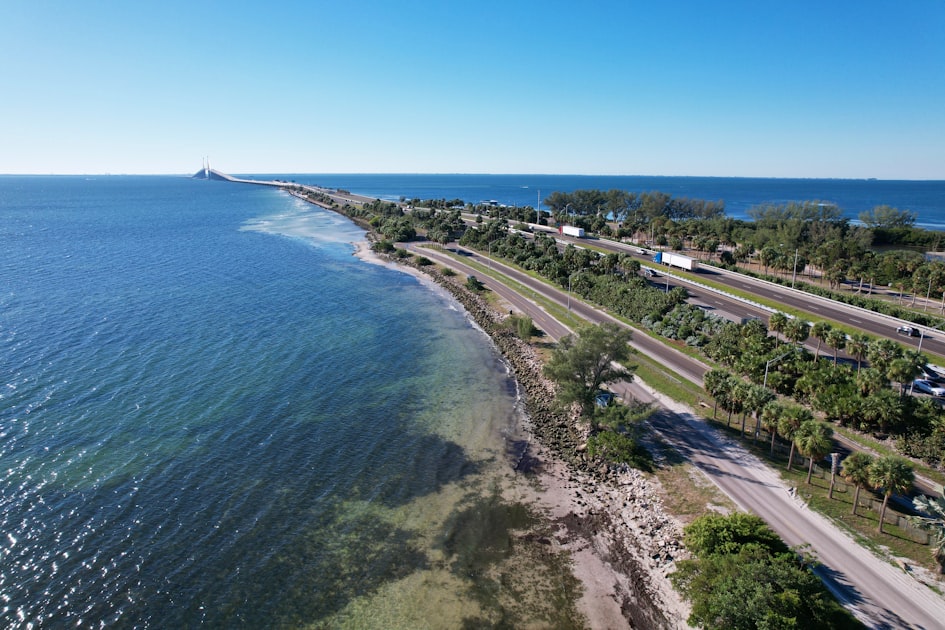
The Sunshine Skyway Bridge (I-275 south) connects St. Pete to Bradenton and Sarasota. It is a high, cable-stayed bridge over the mouth of Tampa Bay. It is a toll bridge. It is not typically used for a Tampa commute but is the primary route south toward Sarasota, Manatee County, and I-75.
SunRunner BRT and PSTA in St. Petersburg
The SunRunner Bus Rapid Transit line runs along Central Avenue from downtown St. Petersburg (at the pier) to St. Pete Beach. It operates with 10-15 minute peak frequency and stops roughly every half mile along Central Avenue. The SunRunner is free to ride as of 2026. It connects the walkable downtown core with the Grand Central District, Tyrone area, and St. Pete Beach.
PSTA (Pinellas Suncoast Transit Authority) operates additional bus routes throughout Pinellas County. Visit psta.net for routes, schedules, and trip planning. Key St. Pete routes include connections to the beaches, Clearwater, Largo, and Pinellas Park. PSTA service is useful for local errands and some commute patterns within Pinellas County, but the lack of cross-bay service to Tampa means driving is the default for Tampa-bound workers.
| Transit Option | Coverage | Frequency | Practical for Tampa Commute? |
|---|
| SunRunner BRT | Central Ave (downtown to St. Pete Beach) | Every 10-15 min peak | No (local only) |
| PSTA Route 52/300 area | St. Pete to Clearwater via US-19 | Every 30-60 min | Possible within county |
| PSTA Local routes | Within St. Pete and county | Every 30-60 min | Limited use |
| Cross-bay bus to Tampa | None as of 2026 | N/A | No service available |
Bicycle Infrastructure in St. Petersburg
St. Petersburg has invested significantly in bicycle infrastructure. The city has an extensive network of protected bike lanes and shared paths in the downtown core and surrounding neighborhoods. Old Northeast, Kenwood, and the Grand Central District are all bikeable for residents who work within the city. The Pinellas Trail connects St. Pete north to Tarpon Springs.
Bicycle commuting to Tampa is impractical for daily use. The Howard Frankland Bridge does not have a dedicated bicycle lane. The Gandy Bridge has a separate pedestrian/bicycle bridge (the Friendship Trail), which connects south St. Pete to south Tampa for cyclists. The 7-mile trail is used for recreation but not commonly for daily Tampa commutes.
Airport Access from St. Petersburg FL
Tampa International Airport (TPA)
TPA is the primary international airport serving the Tampa Bay area. From central St. Pete it is approximately 25-35 miles via I-275 north. Drive time is typically 35 to 50 minutes under normal conditions. TPA has extensive direct flights throughout the US and internationally, with recent terminal expansions increasing capacity.
St. Pete-Clearwater International Airport (PIE)
PIE is approximately 20-30 minutes from central St. Pete via I-275 north and Roosevelt Blvd east. It serves Allegiant, Sun Country, and other value carriers with primarily leisure routes to Midwest and Northeast destinations. Free parking, shorter security lines, and lower fees make it convenient when your destination is on its route map.
Hybrid Work and Remote Work in St. Petersburg
St. Petersburg ranks among the best cities in the Southeast for remote workers. The walkable downtown, diverse coffee shop and coworking scene (including spaces in Kenwood, the Grand Central District, and downtown), and genuine Gulf Coast lifestyle are significant draws. Several major technology, finance, and healthcare employers have either relocated to or expanded their St. Pete presence in recent years, creating additional local employment options beyond Tampa.
For hybrid workers doing 2-3 office days per week in Tampa, St. Pete is very manageable. The Howard Frankland commute at off-peak times (departing before 7 am or after 9 am eastbound, or choosing Gandy for south Tampa destinations) is 30-40 minutes and not unusually stressful by metro standards.
Frequently Asked Questions
How long is the commute from St. Petersburg to Tampa?
The commute from St. Petersburg to downtown Tampa takes 30 to 50 minutes under normal conditions via the Howard Frankland Bridge (I-275). During peak hours (7-9 am eastbound, 4-7 pm westbound), the same trip often runs 50 to 75 minutes. The Gandy Bridge (US-92) is an alternative for specific destination pairs but adds distance for downtown Tampa commuters.
What bridges connect St. Petersburg to Tampa?
Three bridges connect St. Pete to Tampa: the Howard Frankland Bridge (I-275, rebuilt, 4 lanes each direction), the Gandy Bridge (US-92, 2 lanes each direction, no tolls, lower speed), and the Courtney Campbell Causeway (SR-60, connects Clearwater to Tampa via the bay, not directly relevant to St. Pete). The Howard Frankland is the primary route for most St. Pete to Tampa commuters.
Does St. Petersburg have public transit to Tampa?
There is no cross-bay public transit between St. Petersburg and Tampa. PSTA (Pinellas Suncoast Transit Authority) operates within Pinellas County, and HART (Hillsborough Area Regional Transit) operates within Hillsborough County. The two systems do not have a connecting cross-bay bus or rail service. The TBARTA Regional Ferry, a cross-bay passenger ferry, has been studied for decades but has not achieved regular service as of 2026.
Does St. Petersburg have good local transit?
St. Petersburg has the SunRunner Bus Rapid Transit line running along Central Avenue from downtown St. Pete to St. Pete Beach, with 10-15 minute frequency during peak hours. This is the best public transit option in Pinellas County. PSTA also runs routes connecting downtown St. Pete to Clearwater, Largo, Pinellas Park, and the beaches. Visit psta.net for routes and schedules.
Is St. Petersburg FL good for remote workers?
St. Petersburg is excellent for remote workers. The walkable downtown, diverse coffee shop and coworking scene, Gulf Coast lifestyle, and relatively lower cost versus South Florida make it one of the top relocation destinations in the Southeast for remote workers. Neighborhoods like Old Northeast, Kenwood, and the Grand Central District offer walkable work environments.
Related St. Petersburg Resources
Barrett Henry | Licensed Florida Real Estate Broker, REMAX Collective
License #BK3313308 | Pinellas County
Barrett Henry brings 23+ years of real estate experience to every transaction. Specializing in St. Petersburg and Pinellas County residential and investment properties, Barrett helps buyers and sellers navigate the market with data-driven guidance.
Schedule a consultation →